Vinyl Subscription Services vs Record Store Visits
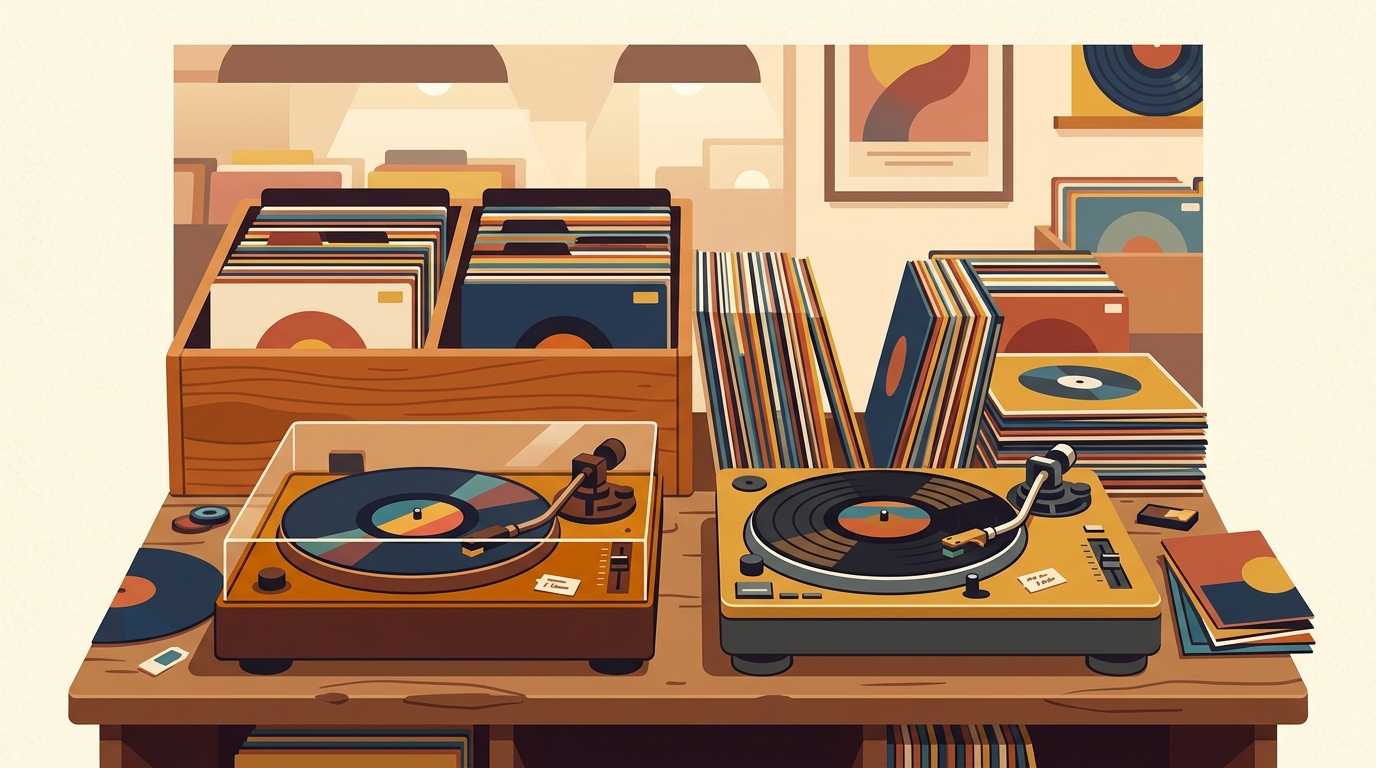
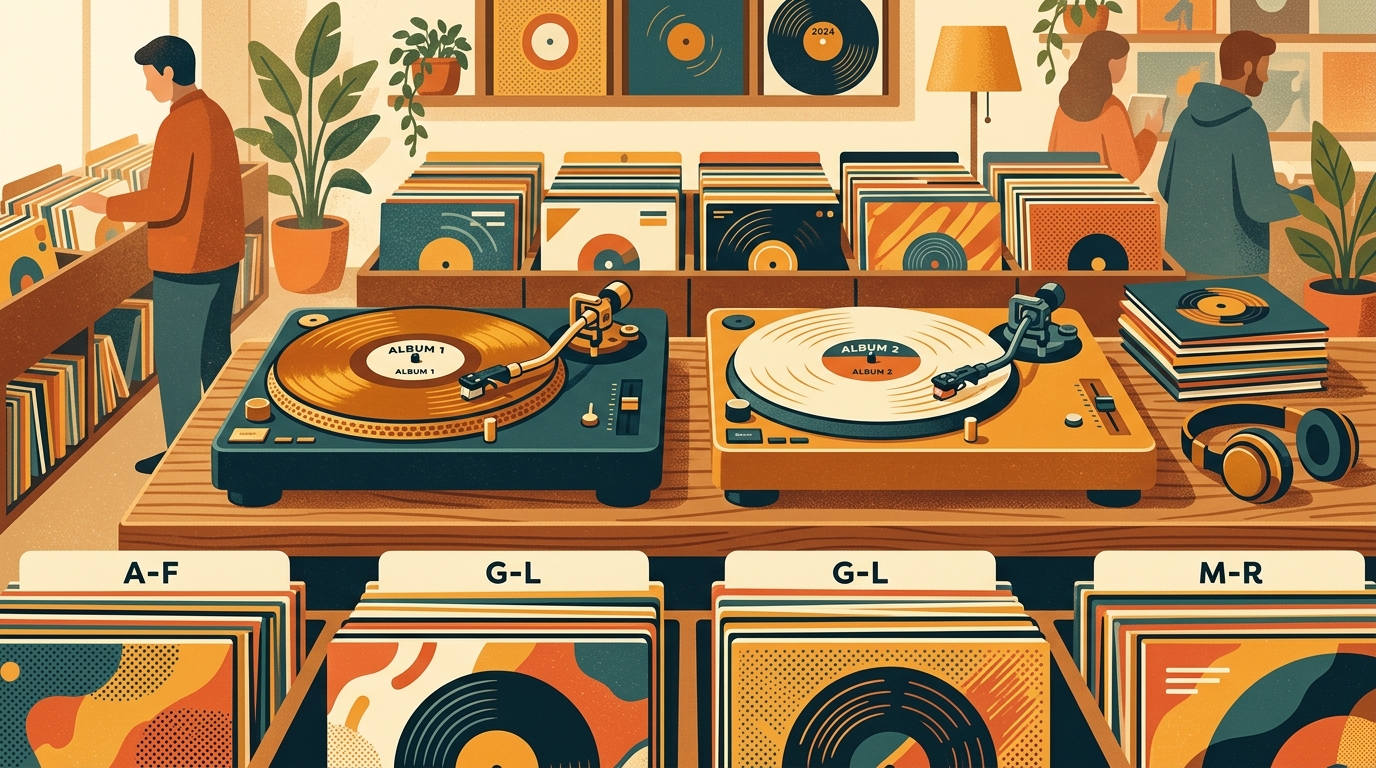
The record store is loud with possibility. Aisles of cardboard sleeves lean against each other, hand-written sale signs taped to the registers, the faint smell of paper and plastic in the air. You run your finger along spines until something catches you, pull it out, flip it over, read the credits on the back. That is the ritual. And then there is the other ritual: coming home, opening a padded mailer, finding a record you did not choose waiting for you, shrink-wrapped and perfect.
Both experiences are real ways to build a vinyl collection. They are also fundamentally different philosophies about what collecting music means, and they come with very different trade-offs.
What You Are Paying For
A vinyl subscription service like Vinyl Me, Please, Record of the Month, or one of the growing number of boutique curators will typically charge between $30 and $50 per month. In return, you receive a curated record, often a colored pressing or limited edition, selected by someone on the other end of the relationship who believes you should hear this record. The appeal is obvious: you get exposed to music you would not find on your own, and you receive it in a format that feels special rather than utilitarian.
Record stores charge per disc, with new releases ranging from $20 to $35 for standard pressings and climbing rapidly for anything collector-oriented. Used bins are where the bargains hide; a pristine copy of a classic can cost $8 or $80 depending on rarity and condition. There is no monthly fee, no commitment, and no algorithm deciding what lands on your shelf. You are entirely in control, which is both the point and the challenge.
The Curation Question
Subscription services have a genuine advantage here. The people running these companies are obsessives. They write detailed essays about why a particular record matters, they dig into label catalogues to surface pressings that have been out of print for decades, and they build communities of subscribers who feel genuine connection to the curation. If you are a listener who wants to be challenged, a subscription can genuinely expand your taste in ways that browsing a record store alone might not.
The counterargument is that a subscription removes the discovery process that makes record collecting feel alive for many people. The moment of finding an obscure soul record in a dusty bin at a local shop, the story that comes with it, the hunt; that is not incidental to the hobby for many collectors. It is the hobby. A monthly record arriving on a predictable schedule, no matter how excellent the selection, lacks that element of serendipity that draws people back to physical stores week after week.
Cost and Commitment
Over a year, a vinyl subscription at $40 per month comes to $480. That buys roughly 12 records, all selected for you, none of which you had to hunt for. If those are records you genuinely wanted and would have bought anyway, the subscription was convenient and possibly cheaper than buying them individually. If you would not have bought them, you have spent $480 on music you might never play.
Visiting record stores carries no fixed cost. You spend what you want, when you want, and you walk out with exactly what caught your eye. The trade-off is that without a plan, it is easy to overspend on impulse buys or, conversely, to leave empty-handed when nothing on that particular day speaks to you. Neither model is inherently more economical; it depends entirely on your buying habits and whether you trust someone else to choose well for you.
The Secondary Market Problem
Both subscriptions and record stores run into the same brutal reality of the current vinyl market: limited pressings and aggressive secondary pricing. A record from a subscription service that quickly sells out can resell on Discogs for two or three times its original price. Subscription fans often describe this as proof that the service surfaces desirable records; critics point out that it turns a listening experience into a speculative investment vehicle.
Record stores feed the secondary market too, of course, but the dynamic is different. You are more likely to find a genuine surprise at a record store, a copy of something that has not been reissued in 40 years and does not appear on any subscription service wishlist. That kind of find does not happen in a padded mailer.
Community and Experience
Independent record stores function as community spaces in ways that a mail-order service simply cannot replicate. You meet other collectors, get recommendations from staff who know your taste, participate in events like Record Store Day, and build relationships with people who care about the same things you do. These interactions are not incidental to the experience; for many collectors, they are the reason the store matters more than the shopping.
Subscription services have built their own communities, typically online, centered on discussion forums, unboxing videos, and subscriber groups. These communities are real and can be deeply engaging. But there is no substitute for standing in a room full of records with someone who loves them, debating whether the reissue is better than the original pressing.
So Which Is Better
There is no single answer, which is the honest version of this comparison. A vinyl subscription is excellent for someone who genuinely wants to be surprised, who trusts the curators, who listens to everything they receive, and who values the convenience of a monthly record arriving without effort. A record store is the right choice for someone who treats the hunt as part of the joy, who wants to hold a record before buying it, and who finds genuine pleasure in the social experience of a shop.
The most interesting collectors tend to do both. They have a subscription that exposes them to things they would never find alone, and they still show up at the record store on a Saturday morning, ready to dig. The two models do not have to compete. They serve different impulses, and a healthy vinyl habit can include pieces of each.
A spreadsheet tracks what you own. What's Spinning identifies what's playing.
On-device vinyl ID logs your listening history automatically. 7-day free trial.
Looking for Shazam for vinyl?
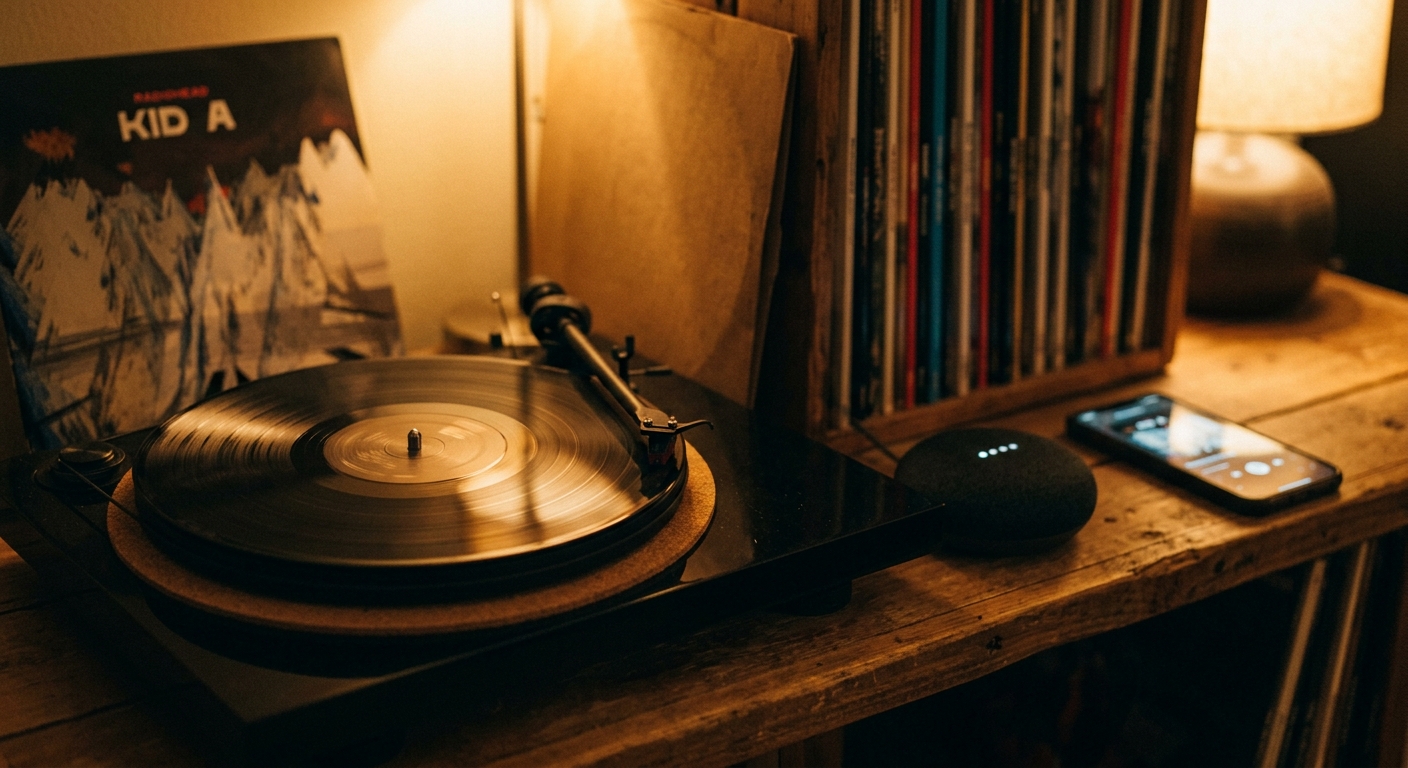
What's Spinning identifies what's playing on your turntable on-device, logs history, and AirPlays now-playing to your TV.
Comparing vinyl ID apps?
Analog requires Discogs and is iPhone-first (iPad coming). What's Spinning works without Discogs on iPhone and iPad with AirPlay.
Try What's Spinning Free
Turn your iPad into a live now-playing display. Track every record you spin.
START FREE TRIALThen $4.99/mo or $39.99/yr · Cancel anytime