How to Identify First Pressings on Vinyl

First pressings are the record-collector version of first editions: exciting, sometimes valuable, and easy to misidentify if you only look at the front cover. A true first pressing is usually one of the earliest manufactured copies of a specific release, made from early lacquers, mothers, stampers, labels, sleeves, and plant parts.
The good news is that first pressings leave physical clues. Once you have identified which pressing you own, save the exact variant in What's Spinning so you always remember whether you're holding the original or a later reissue, and what you actually listened to last.
Start with the dead wax, not the hype sticker
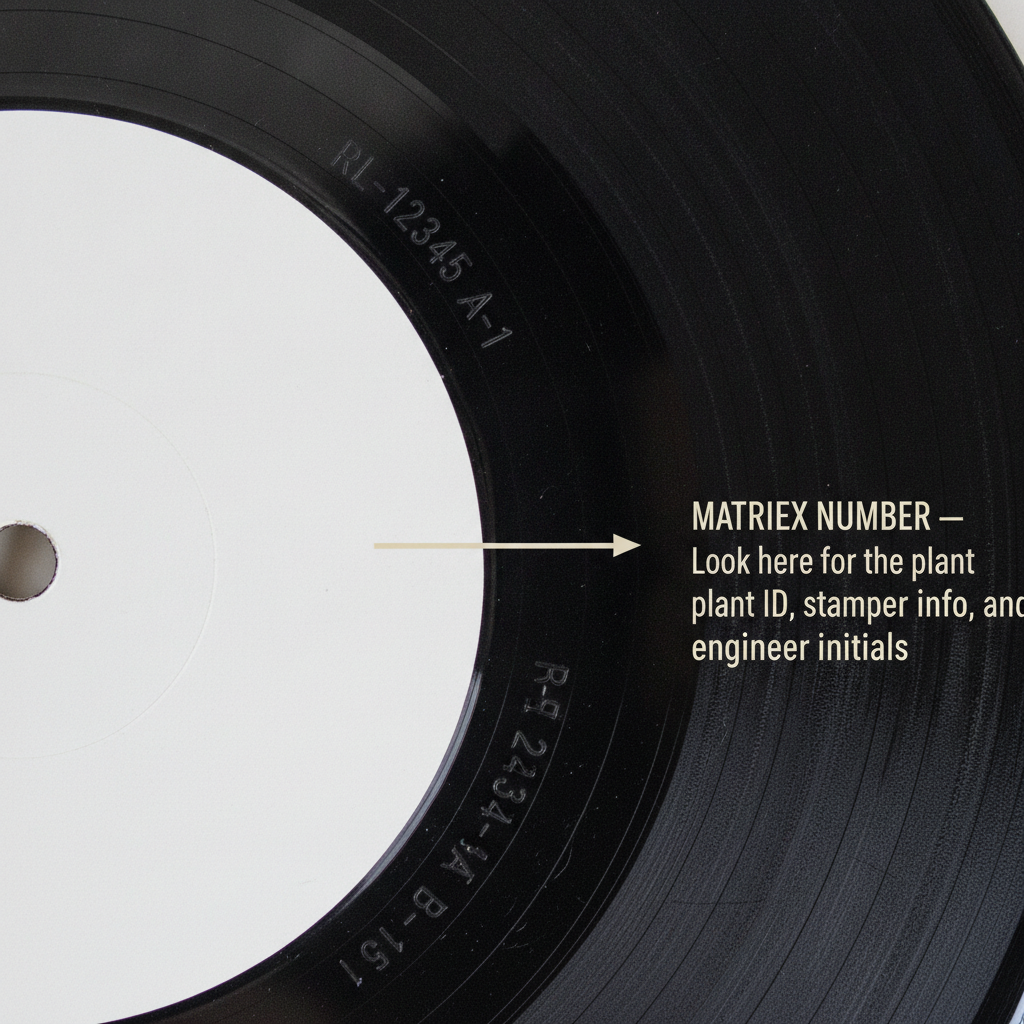
The most important area is the runout groove, often called the dead wax, between the last track and the label. A matrix number is an alphanumeric code stamped, etched, or both in that area. Wikipedia's summary is collector-useful: the matrix number is intended for internal plant use, but collectors study it because it can identify the edition, cut, plant, engineer, or date information associated with a record. The label may also show a matrix number, but do not confuse it with the catalog number. The catalog number is usually the retail release number, while each side normally has its own matrix information.
For first pressings vinyl, early matrix suffixes matter. On many UK records, A-1/B-1 or A1/B1 often suggests an early cut. On some US records, suffixes such as 1A, 1B, or -1 can point to an early lacquer. Treat that as evidence, not proof. Match all sides against known first-pressing data, not the lowest number in isolation.
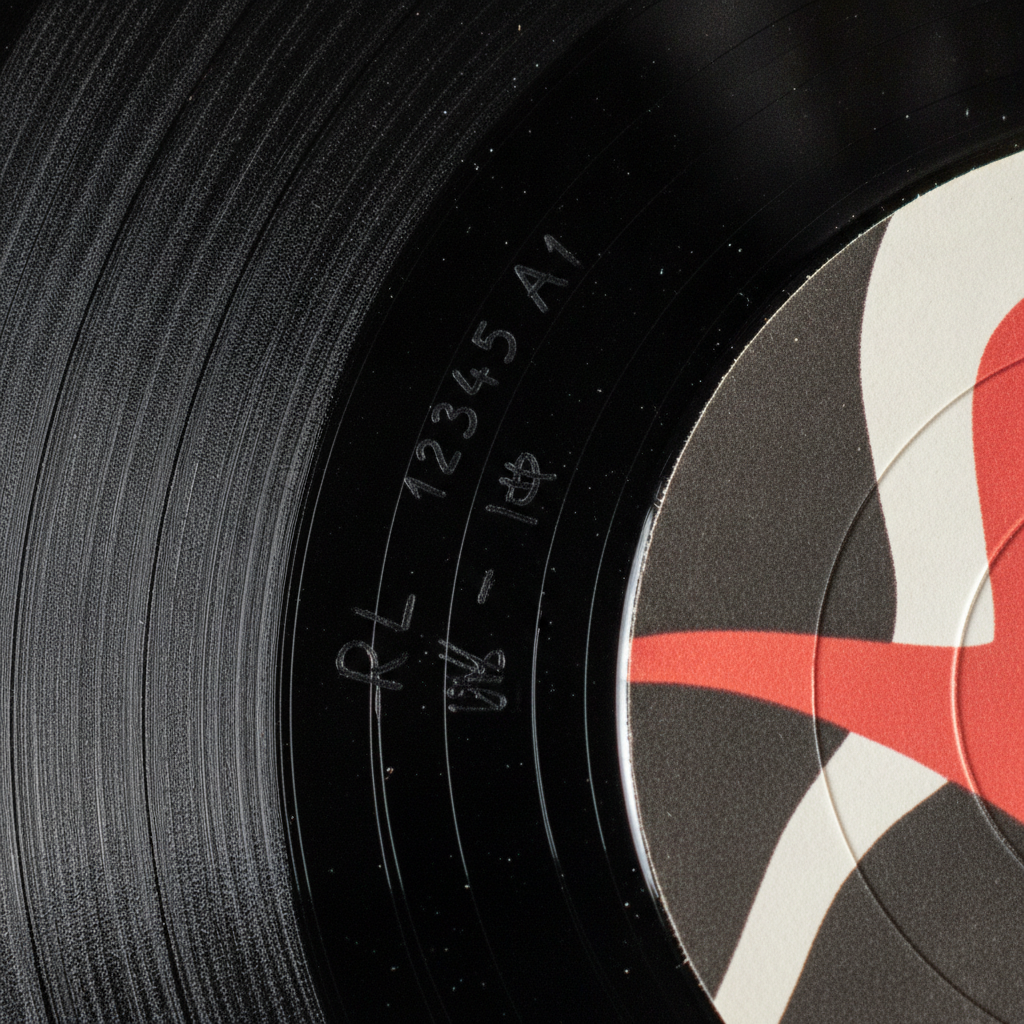
That said, the suffix on its own is not proof. Many first pressings land at slightly later suffixes than you would guess from the cut, and some later plants reused A-1/B-1 by accident. Use the suffix as one clue among several, and always photograph both sides of the runout before you decide.
Read every mark in the runout
Use a bright angled light and rotate the record slowly. Stamped marks look machine-pressed; etched marks look handwritten. Write down both sides exactly, including dashes, spaces, crossed-out text, initials, symbols, and tiny logos. Cutting engineer marks can be decisive. A famous example is Led Zeppelin II with "RL" in the dead wax, referring to mastering engineer Robert Ludwig. Collectors prize those early Ludwig cuts because the mastering is famously powerful, even though the album also exists in many non-RL copies that look similar at a glance.
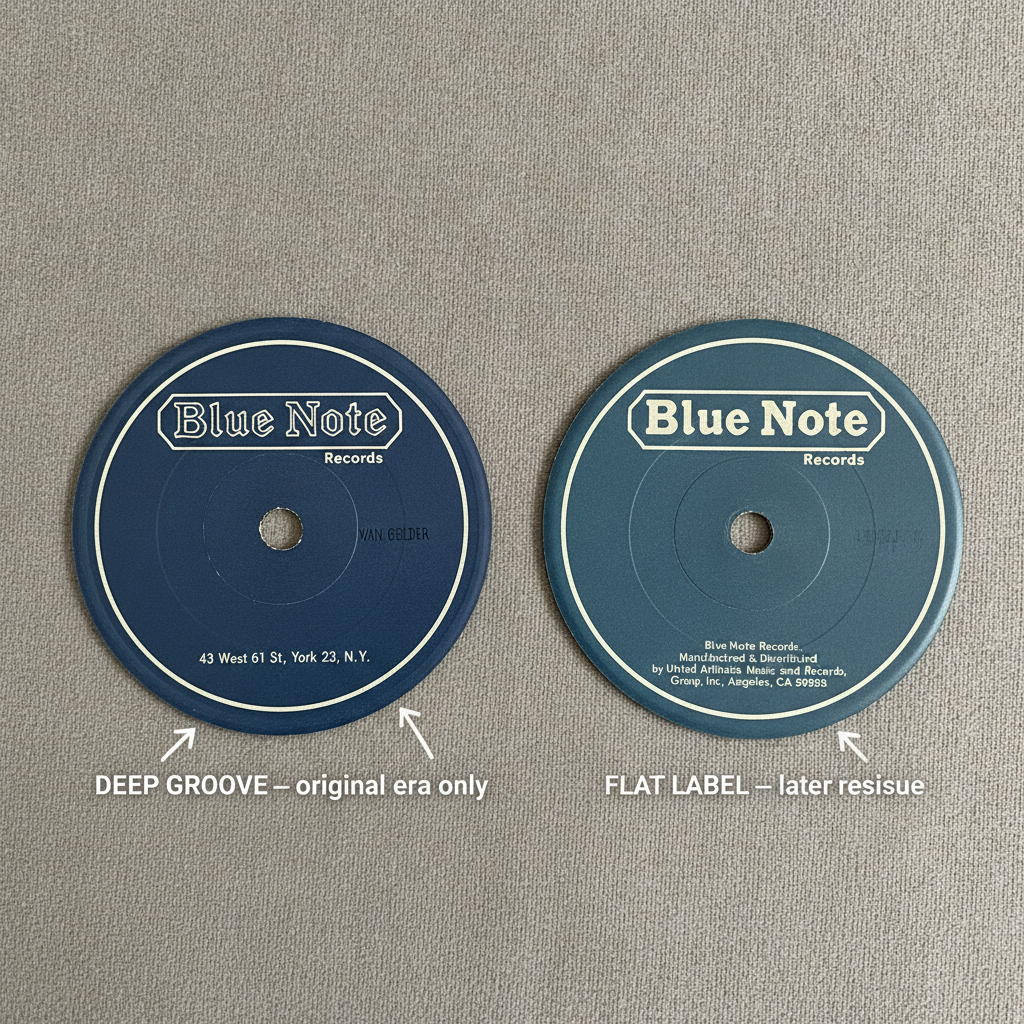
Plant marks can be just as important. US major-label albums were often pressed at several plants at once. Two copies can share a jacket and catalog number but come from different plants or metal parts. For jazz collectors, Blue Note originals are a classic field lesson. LondonJazzCollector's Blue Note guide notes that original-era identification can depend on label address, deep groove, Plastylite's "ear" mark, VAN GELDER stamps, and series-specific details. No single clue does the whole job.
Compare the label like a printer, not a fan
After the runout, inspect the label. First labels often differ in address, logo, rim text, publisher credits, typography, and even spelling mistakes. The Beatles' UK Please Please Me is a collector cliché for a reason: early mono copies on the black-and-gold Parlophone label are treated very differently from later yellow-and-black Parlophone copies. Same album, same music, radically different pressing story.
Look for small text changes. Did the label list a company address that only existed before a certain year? Are publishing credits, rights societies, or track timings different from confirmed early copies? Discogs is useful because its database is organized by specific releases rather than only by album title. Discogs itself describes its catalog as release-specific, which is exactly what you need when distinguishing one pressing from another.
Check the jacket, inner sleeve, and inserts
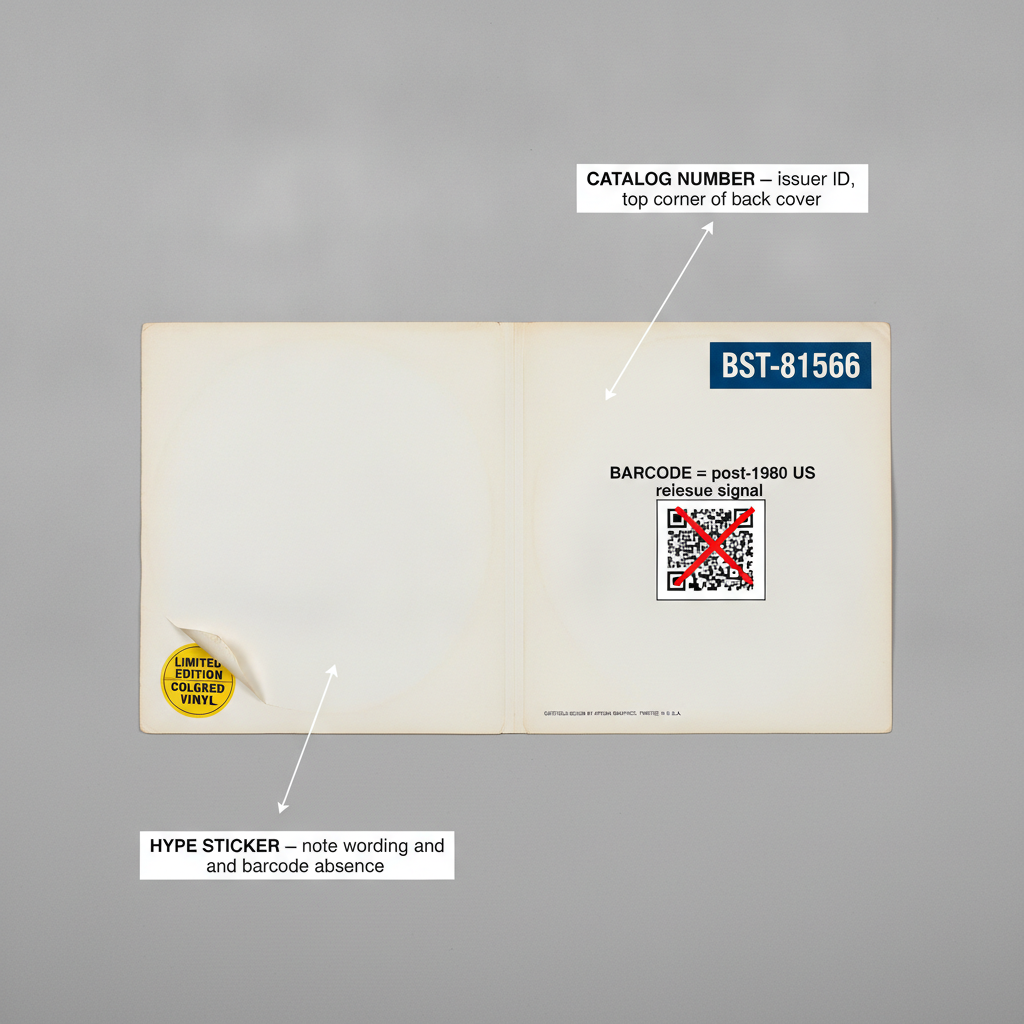
A first pressing is not only the disc. Original jackets may have different printers, addresses, lamination, paste-over construction, spine text, barcodes, price codes, or hype stickers. A barcode on a 1960s rock LP is an obvious red flag. Inner sleeves can date a copy too; a company sleeve promoting albums from three years later probably did not ship with the first batch. Once you have confirmed you are holding an original, the next thing you probably care about is keeping it clean, so our spot-cleaning guide between full washes is the natural next read.
Inserts matter for punk, metal, indie, and private-press records. Lyric sheets, fan-club forms, posters, postcards, and numbered certificates can separate a first issue from a later repress. Japanese pressings may include obi strips and inserts that affect completeness and value, but an obi alone does not make something a first pressing.
Verify against trusted release data
Once you have the physical clues, cross-reference them. Use Discogs release pages, label discographies, collector guides, auction archives, and specialist sites. For expensive records, compare multiple sources. Wikipedia's matrix-number article is helpful for the general concept, Discogs is strong for release variants, and specialist guides like LondonJazzCollector are invaluable when a label has deep collector mythology.
Be cautious with marketplace language. "Original" can mean first country of release, first issue in that buyer's country, early vintage copy, or simply "not a modern reissue." "First press" is often used loosely. If the seller cannot provide runout photos, label photos, and jacket details, treat the claim as unverified.
A practical first-pressing checklist
- Confirm the country and catalog number. A US first pressing and UK first pressing can both be legitimate, but they are different objects.
- Transcribe both runouts. Include matrix numbers, suffixes, engineer initials, plant marks, and anything crossed out.
- Compare label design. Address, rim text, logos, rights societies, and publishing credits are often the giveaway.
- Inspect the packaging. Jacket printer, spine, barcode, inner sleeve, inserts, and hype stickers should fit the release date.
- Match the exact variant. Use at least two sources for expensive records.
- Grade condition separately. A trashed first pressing is still historically interesting, but it may not be the best listening copy.
The honest answer is that first pressing identification is detective work. Sometimes the evidence lines up: early matrices, correct label, correct sleeve, matching plant, no contradictions. Sometimes it points to an early repress, a contract pressing, a later sleeve swap, or a copy assembled over decades. That is not failure. That is collecting.
If you want a record of the work you just did, log the variant details in What's Spinning while you have the record in front of you. Matrix, label, sleeve, inner sleeve. Future you, opening the same copy six months later, will be glad you did.
First pressing vs. later pressing at a glance
| Feature | First pressing | Later pressing |
|---|---|---|
| Matrix / runout | Often A1 / B1, early suffixes, original stamper marks | Higher suffix numbers, different stamper, later cut |
| Catalog number | Original release number | Often reissued under same number or a new one |
| Label design | Original artwork, address, rim text, credits | Updated logos, new rim text, modern rights bodies |
| Sleeve | Original printer, gatefold type, barcode absent (pre-1980s) | Revised printing, generic barcode added |
| Inner sleeve / inserts | Original lyric sheets, posters, hype stickers, obi | Generic white or company sleeves; inserts often dropped |
| Plant marks | Single plant, original stamper | Multiple plants, contract pressings, later stampers |
| Typical value | Usually higher among collectors | Usually lower, sometimes higher for audiophile reissues |
| Sound | Depends on condition and cutting | Modern reissues can sound excellent from clean sources |
Use this table as a quick reference while you work through your own copy. Any single row can vary by label, country, and era, so treat the whole table as clues rather than a checklist on its own.
FAQ
Are all first pressings more valuable?
No. Value depends on artist demand, rarity, condition, country, mastering reputation, and completeness. A clean later audiophile reissue can beat a common first pressing in poor shape.
Does A1/B1 always mean first pressing?
No. It often suggests an early cut, especially on some UK records, but pressing history varies by label and plant. Always compare the runout with label, jacket, and known release data.
Can a first pressing sound worse than a reissue?
Yes. First pressings can be worn, noisy, off-center, or cut from compromised production choices. Some reissues are carefully mastered from excellent sources.
Does a barcode mean reissue?
Usually yes for records originally issued before the 1980s. A standard UPC barcode on a 1960s or early 1970s LP is a strong signal that the jacket is a later printing, even if the disc itself is older. Barcodes only began appearing on US LPs around 1975 and on European LPs a few years later.
Is Discogs always right?
No. Discogs is release-specific and crowd-sourced, which is exactly what first-pressing hunters need, but individual entries can be wrong on which version is earliest for a given label. Use Discogs to see what variants exist, then cross-check at least one specialist source for high-value records.
Is the first pressing always the best sounding?
No. Many original pressings are now rare because they were noisy, off-center, or cut hot from rushed lacquers, and were quietly replaced by better-engineered reissues. Some audiophile reissues, pressed from new stampers and clean sources, sound better than a played-out first pressing in real-world condition. Sound and historical first-pressing status are related, but not the same thing.
What photos should I ask a seller for?
Ask for clear photos of both labels, both runouts, the jacket, spine, inner sleeve, inserts, and any defects. For high-value records, runout photos are not optional.
Related reading
- How to Spot-Clean Vinyl Records Between Full Washes — the practical care companion once you have confirmed the pressing.
- The Best Vinyl Albums of the 2020s — most recent pressings to practice the checklist on.
- The Best Classical Albums on Vinyl — classical pressings have unusually rich variant history, good practice cases.
- The Best Blues Albums on Vinyl — strong on label-era identification, which is a core first-pressing clue.
Sources
A spreadsheet tracks what you own. What's Spinning identifies what's playing.
On-device vinyl ID logs your listening history automatically. 7-day free trial.
Looking for Shazam for vinyl?
What's Spinning identifies what's playing on your turntable on-device, logs history, and AirPlays now-playing to your TV.
Comparing vinyl ID apps?
Analog requires Discogs and is iPhone-first (iPad coming). What's Spinning works without Discogs on iPhone and iPad with AirPlay.
Try What's Spinning Free
Turn your iPad into a live now-playing display. Track every record you spin.
START FREE TRIALThen $4.99/mo or $39.99/yr · Cancel anytime