Perfect Albums With No Skips: 15 Records That Reward Front-to-Back Listening
The phrase perfect albums with no skips gets thrown around a lot, but vinyl collectors usually mean something more specific than "every song is famous." A true no-skip album has shape. It has a first side that pulls you in, a side break that feels intentional, and a second side that earns the walk back to the turntable. It is the difference between a playlist of good songs and a record that seems to know exactly where your attention should go next.
For this research list, I looked for albums that meet four vinyl-friendly tests: documented cultural impact, meaningful chart or certification history, production choices that benefit from focused listening, and collector interest that makes pressing details worth knowing. The point is not to crown the most expensive records. It is to identify albums that reward the old ritual: choose a record, clean it, drop the needle, put the phone down, and let the sequence do its work.
Prices and availability change constantly, so use the pressing notes as a field guide rather than a shopping commandment. A near-mint modern reissue often gives more joy than a famous original that has been played to death. The records below are listed as albums to live with, not museum pieces to fear.
15 perfect albums with no skips for vinyl collectors
-
The Dark Side of the Moon, Pink Floyd, 1973
Recorded at Abbey Road on a Neve console with Alan Parsons engineering, Dark Side of the Moon treats the studio as a fourth instrument. Alan Parsons, then in his mid-twenties, had to invent the clock-chime patch because no tape machine had one. The result is a record that sounds engineered on purpose, not just mixed. Side A is essentially one long piece: heartbeat, spoken fragments, Money's time-signature pivot, and the side break lands you at Us and Them with the room still ringing. The prism sleeve by Storm Thorgerson is part of the listening experience, too; early copies came with two pyramids and a sticker.
For pressing notes, the original UK Harvest SHVL 804 with the solid blue prism is the most-collected variant, and the 1993 twenty-fifth anniversary remaster by James Guthrie and the 2003 SACD both cleaned up surface noise without flattening the bass. The 2023 fifty-year edition is the one most listeners will actually want, mastered at half-speed by Bernie Grundman. Dark Side is also the record where condition matters more than label: a noisy first pressing with groove wear is a worse listen than a clean 2018 repress.
Source: album background, chart, personnel, and release details.
-
What's Going On, Marvin Gaye, 1971
Marvin Gaye cut this at three Detroit studios in quick succession: Hitsville West (the Motown studio Berry Gordy kept off Woodward), Golden World on West Davison, and United Sound on Mingus Street. The album was originally going to be a single, then a five-song EP, and only became a full LP because Gaye insisted. Motown's quality control tried to bury it: the title track was held back for two months before the label agreed to a February 1971 release. The sequencing puts the title track first, which was almost unheard of at Motown, and the closing Mercy Mercy Me to Inner City Blues is structured like a hymn bookending an argument.
Original Tamla TS310 gatefolds in clean condition are not cheap, but the 2008 Hip-O Select reissue and the 2016 Mobile Fidelity 45 RPM 2LP are the practical picks for listeners. The horn charts, Gaye's stacked vocals on What's Happening Brother, and the Detroit Symphony strings on God Is Love all bloom on a quiet pressing.
Source: album background, chart, personnel, and release details.
-
Kind of Blue, Miles Davis, 1959
Bill Evans wrote the modal chord skeletons on a single sheet of staff paper, the night before the session, and the band shaped them on the floor of Columbia 30th Street Studio. Two dates: March 2 for the five main tracks, April 22 for Flamenco Sketches and the Blue in Green outtake. Wynton Kelly plays piano on Freddie Freeloader because Evans was exhausted; everyone else played modal from Evans's charts. That single sheet of paper is in the Smithsonian.
Pressings are a small forest. The original 1959 Columbia six-eye mono CL 1355 is the blue-chip variant, and the stereo CS 8163 has its own partisans because the stereo pan on So What puts Paul Chambers' bass further left than the mono mix. The 1997 Classic Records reissue and the 2009 Sony Legacy SACD (mastered by Mark Wilder) are the modern reference. The 2008 fiftieth-anniversary edition, packaged with the Bill Evans sketch sheet and alternate takes, is the one to keep.
For turntable setup, this record punishes bad VTA adjustment; the upright bass on So What sounds flat if your arm is too low and thin if it's too high. Worth a few minutes with a stylus force gauge before forming opinions.
Source: album background, chart, personnel, and release details.
-
Rumours, Fleetwood Mac, 1977
Recorded at Record Plant in Sausalito between February 1976 and March 1977, while the five band members were breaking up with each other in three separate directions. Lindsey Buckingham and Stevie Nicks were splitting, the McVies were divorcing, and Mick Fleetwood's marriage was ending. The studio was a bunker with a 24-track MCI console and a view of the bay. The Chain, which closes side one, was built from a jam one night when the band had nothing else to do; the bass and drum intro was later used as the BBC Premier League theme in 1992, three decades after the record came out.
The 1977 Warner Bros BSK 3010 in clean condition is a steady collector pick. For listening, the 2013 45 RPM 4LP mastered by Steve Hoffman and Kevin Gray is the modern reference, with the original album on four sides giving the bass on The Chain the space it deserves.
Source: album background, chart, personnel, and release details.
-
OK Computer, Radiohead, 1997
The band rented St Catherine's Court, a Jacobean manor house near Bath, for six weeks in late 1996. They had no cell phones, no internet, and a half-mile walk back to the local pub. The isolationist recording process is baked into the record: the songs sound like they were written by people who had not slept. Nigel Godrich was twenty-three, and OK Computer was the first record where the band gave him full production credit. The strings on Motion Picture Soundtrack were scored by Jonny Greenwood and recorded in a single day at Abbey Road.
The 1997 UK Parlophone NODATA01 pressing is the variant most collectors want. The 2017 OKNOTOK 3LP reissue is the practical pick: the third disc collects three B-sides (I Promise, Man of War, Lift) that the band had shelved as too personal. The original album sequence is preserved.
For a first-time listen on vinyl, side B is where the album pivots: Exit Music, Let Down, Karma Police. The 18-minute stretch from Let Down through The Tourist is the most sequenced run on the record, and the side break before it lands cleanly.
Source: album background, chart, personnel, and release details.
-
Discovery, Daft Punk, 2001
Every track on Discovery uses samples from 1970s and early 1980s records; the duo spent two years on clearance alone. Digital Love lifts from George Duke's I Love You More, Aerodynamic from Sister Sledge's Il Macquillage Lady, Something About Us from the Love Unlimited Orchestra. The album was conceived as a single piece of music, and the Japanese version came with a bonus disc of instrumentals that made the architecture obvious. The 2003 anime Interstella 5555, directed by Leiji Matsumoto, replaced the music video cycle with a one-hour visual album; if you have not seen it, set aside an evening, because the sequencing becomes clearer with the picture.
On vinyl, the 2LP pressing is the one to find. The mix is bass-heavy by 2001 standards and sounds thin on small speakers; on a turntable with a warm cartridge, Aerodynamic's bassline opens up.
Source: album background, chart, personnel, and release details.
-
The Miseducation of Lauryn Hill, Lauryn Hill, 1998
The classroom skits were recorded with actual students at a Harlem school, not professional actors. Many of the songs were written in 1996 and 1997 while Hill was filming and touring with the Fugees; the sessions happened at New Ark Studios in East Orange, New Jersey, and at Chung King Studios in Manhattan. The delay between the record's announcement and its August 1998 release was tied to label disputes, and the album was originally slated to be a Fugees record. It came out as a solo debut and won the Grammy for Album of the Year in February 1999, the first hip-hop record to do so.
The 1998 Columbia 2LP pressing has remained in print on and off, and the 2018 reissue is the practical pick for most listeners. To Zion, the song for her son, was almost left off the record for label reasons and is the side-B centerpiece.
Source: album background, chart, personnel, and release details.
-
To Pimp a Butterfly, Kendrick Lamar, 2015
To Pimp a Butterfly was built around a live band: Terrace Martin, Thundercat, Ronald Isley, and session players who had been in the Isley Brothers, Parliament, and Flying Lotus's circle. The Isley Brothers sample on How Much a Dollar Cost and the Robert Glasper piano work on Wesley's Theory are the most-cited musical moments, but the hidden architecture is Kendrick's recurring spoken-word poem, which opens the album and reappears between tracks until its final reading over a 2014 Tupac interview at the end of Mortal Man. That last track is seventeen minutes; the album is eighty-one; the math is not coincidental.
The standard 2LP pressing is widely available, and the limited colored variants from 2015 are the collector entries. The 2022 deluxe digital edition adds the pre-album instrumentals and is a good reference for hearing the band's original arrangements before Kendrick's vocals landed.
Source: album background, chart, personnel, and release details.
-
Forever Changes, Love, 1967
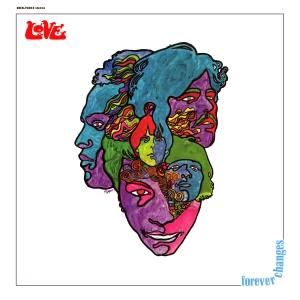
Love cut Forever Changes in the summer of 1967, while the band was breaking up. Arthur Lee had told Elektra the record would be his last with the group, and a few of the other members were dying or quitting during the sessions. Bryan MacLean wrote and sang the two tracks that change the album's center of gravity, Alone Again Or and Old Man; Lee wrote the rest. The orchestral arrangements are by David Angel, not, as is often written, the Wrecking Crew; Angel was a twenty-four-year-old arranger working out of a small studio in Los Angeles. The album sold poorly in 1967 and was reappraised in the 1970s and 1980s into its current standing as one of the period's definitive records.
The original 1967 Elektra EKS-74013 in the gold and tan label is the pressings to find. The 2011 Mobile Fidelity 2LP and the 2018 Sundazed mono reissue are the modern choices, with Sundazed's mono mix restored from the original session tapes.
Side two of the original pressing opens with The Red Telephone, and the running order on the LP is worth respecting: the band sequenced the album so that the quieter tracks land after the louder ones, and the side break is structured around it.
Source: album background, chart, personnel, and release details.
-
Hounds of Love, Kate Bush, 1985
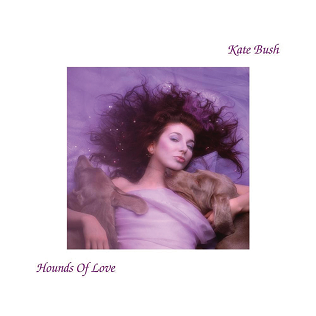
Side B of Hounds of Love is The Ninth Wave, a seven-part suite about a woman drowning in the open ocean. Bush wrote the suite first and built side A around it. The recording was done largely at her home studio in Eltham, southeast London, with a Fairlight CMI used throughout for sampled strings, choirs, and the whale song that opens the suite. Running Up That Hill was famously kept off the US number-one slot by Born in the USA in 1985, then returned to the Billboard Hot 100 number-one slot in June 2022, thirty-seven years later, after its use in Stranger Things.
The 1985 UK EMI EMC 3509 gatefold pressing is the most-collected early variant. The 2018 remastered 2LP keeps the original sequencing intact and the audio is cleaner; the 2022 Fish People reissue is the version most new listeners will find.
Source: album background, chart, personnel, and release details.
-
Voodoo, D'Angelo, 2000

Five years between Brown Sugar and Voodoo, and the gap shows up in the sound. D'Angelo and the Soulquarians built the record at Electric Lady Studios in New York and at his home studio in Harlem, with Questlove on drums, James Poyser on keys, and Charlie Hunter on bass. The band played live in the room; almost everything is on a small number of microphones. The track Untitled (How Does It Feel) was recorded in a single take in 2000 with the same microphone setup D'Angelo had used for the rest of the album, and the vocal is a single pass with one overdubbed harmony.
The 2000 US 2LP Virgin pressing is the original. The 2016 Light in the Attic / Modern Classics reissue, remastered from the original analog tapes, is the modern reference; the gatefold reproduces the original photography and the pressing is quiet.
Source: album background, chart, personnel, and release details.
-
Mezzanine, Massive Attack, 1998
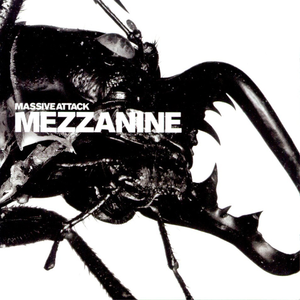
Recorded in Bristol and London between 1996 and 1998, Mezzanine was Massive Attack's third record and the one that broke the band internationally. The Bristol scene that produced 3D, Daddy G, and Mushroom was ending: Tricky had left to go solo, and the album moves away from the jazz-sample sound of Blue Lines and Protection toward a heavier, guitar-driven production. Teardrop's vocal was recorded in a single session with Elizabeth Fraser of the Cocteau Twins, who arrived at the studio with the melody improvised and left with the take that ended up on the record. The opening bass figure on Angel was sampled from a seventies Isaac Hayes track and pitched down.
Pressings: the original 1998 UK Virgin 2LP is the collector's pick. The 2018 remastered edition, also on 2LP, is the practical one; the original sleeve by Tom Hingston photographs a stag beetle, which has become iconic.
Source: album background, chart, personnel, and release details.
-
The Low End Theory, A Tribe Called Quest, 1991
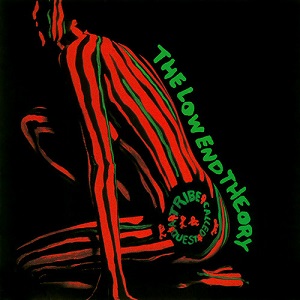
The bass on The Low End Theory is real. Ron Carter, the jazz bassist who had played on dozens of Blue Note sessions, played upright bass on four of the album's tracks, and the rest of the bass work was played live and processed through a phaser. Ali Shaheed Muhammad's drum programming sits in the upper register, and Q-Tip and Phife trade verses over a soundscape that is closer to a Smashing Pumpkins B-side than to 1991 hip-hop. The album was recorded at Battery Studios in New York and at Daddy's House in Queens.
Source: album background, chart, personnel, and release details.
-
Spirit of Eden, Talk Talk, 1988
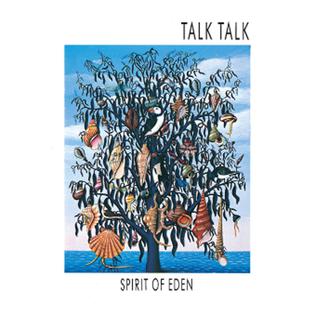
Spirit of Eden was the record where Talk Talk stopped being a synth-pop band. The sessions went on for over a year; the EMI standoff between Mark Hollis and the label is documented in the sleeve thank-yous and in later interviews. The band recorded with a chamber ensemble and a choir, and the final album was almost entirely rejected by EMI's commercial team, who released it with a fraction of the marketing that Colour of Spring had received the year before. The record is built around extreme dynamic range. Side A is essentially one long piece; I Believe in You is the most-covered song, but it is not a single; the album was not promoted with a single.
The original 1988 UK Parlophone PCS 7308 pressing has been quietly reappraised into a serious collector's item, especially in clean condition. The 2012 2LP reissue, which uses the original analog master, is the practical pick. On a quiet system with a good cartridge, the silence between the notes is part of the music.
Source: album background, chart, personnel, and release details.
-
Mingus Ah Um, Charles Mingus, 1959
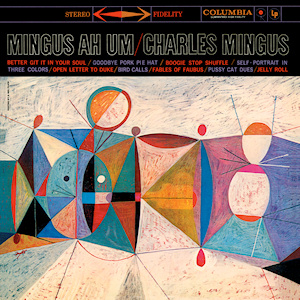
Mingus ran the recording sessions like a workshop. The band played through the tunes many times before the tape rolled; Take the A Train was recorded in two takes, and the released version is take one. Better Git It in Your Soul opens the album and introduces Mingus's gospel-blues-jazz form; the suite is six-and-a-half minutes long and was originally a 1954 Mingus workshop piece. Fables of Faubus, the album's political track, was recorded with an alternate lyric for the original Columbia pressing; the explicit version did not appear on a Mingus studio LP until the 1979 rerecorded Me, Myself an Eye.
Original 1959 Columbia six-eye mono CL 1370 is the blue-chip variant. The 2019 Analogue Productions mono reissue, mastered by Bernie Grundman from the original tapes, is the modern reference. The 2020 stereo reissue from the same sessions has its own following, but the mono is the Mingus-approved version.
Source: album background, chart, personnel, and release details.
What to buy first
If you are building from scratch, start with records that teach different listening lessons. Kind of Blue is the cleanest entry into space, tone, and modal jazz. What's Going On shows how soul can become a continuous social document. Rumours proves that blockbuster songwriting and album craft can coexist. Discovery is the party record that still has an emotional arc. To Pimp a Butterfly is the modern double LP that makes the strongest case for hearing everything in order.
After that, choose by mood. Want late-night bass and atmosphere? Go for Voodoo, Mezzanine, or Spirit of Eden. Want art-pop structure? Try Hounds of Love or OK Computer. Want your jazz shelf to move beyond the obvious single starter record? Put Mingus Ah Um beside Kind of Blue and listen to how differently two 1959 classics can use the LP format.
FAQ
What makes an album a no-skip album?
A no-skip album is not just an album with no bad songs. It is a record where sequencing, pacing, production, and emotional logic make the full listen stronger than any individual track. On vinyl, the side break is part of that design.
Are original pressings always better?
No. Originals can be collectible and wonderful, but condition and mastering matter more than age. A clean, quiet, well-mastered reissue is often better for daily listening than a noisy first pressing with groove wear.
How many albums should a new vinyl collector buy first?
Start with five to ten records you already love enough to play all the way through. A small shelf that gets played is better than a wall of records that only looks impressive.
How can I track which records I actually listen to?
You can keep a written log, use a spreadsheet, or use a turntable-aware tracker like What's Spinning. The useful thing is seeing what you really play, not just what you intended to play when you bought it.
A spreadsheet tracks what you own. What's Spinning identifies what's playing.
On-device vinyl ID logs your listening history automatically. 7-day free trial.
Looking for Shazam for vinyl?
What's Spinning identifies what's playing on your turntable on-device, logs history, and AirPlays now-playing to your TV.
Comparing vinyl ID apps?
Analog requires Discogs and is iPhone-first (iPad coming). What's Spinning works without Discogs on iPhone and iPad with AirPlay.
Try What's Spinning Free
Turn your iPad into a live now-playing display. Track every record you spin.
START FREE TRIALThen $4.99/mo or $39.99/yr · Cancel anytime