How the Beatles and Stones Made the LP Format Mainstream
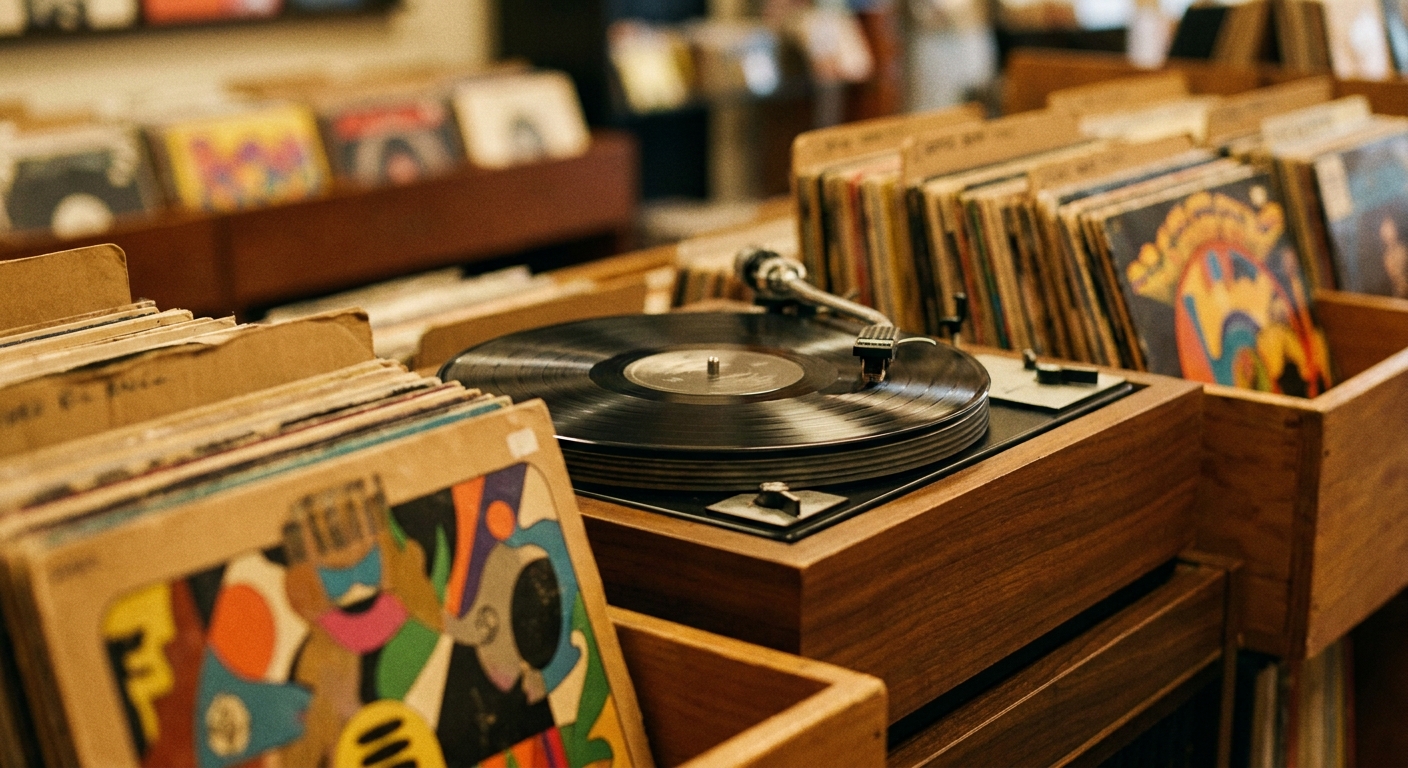
If you collect 1960s records, you can almost hear the LP format changing under the needle. At the start of the decade, pop albums were often treated as souvenirs: a hit single or two, a few covers, maybe some filler, and a cover photo designed to move units quickly. By the end of the decade, the rock LP had become the main event. Fans bought albums to live with them, critics reviewed them as statements, and bands built whole identities around long-playing records.
The Beatles and the Rolling Stones did not invent the LP. Columbia introduced the 33 1/3 rpm microgroove long-playing record in 1948, and the format had already become essential for classical music, jazz, cast recordings, and adult pop. What the British Invasion changed was the expectation that a rock group could make an album that mattered from front to back. That shift is the heart of the 1960s British Invasion vinyl LP format story.
Before the British Invasion, the single still ruled pop
The 45 rpm single was perfect for teenagers, radio, jukeboxes, and quick hits. In early rock and roll, that was the center of gravity. Albums were more expensive, and many labels saw them as secondary products assembled around successful singles. That mattered physically, too. A 12-inch LP could hold roughly 20 minutes per side, but a lot of pop albums did not use that space to build an argument or a mood. They simply collected product.
Then the British Invasion arrived as both a musical and commercial shock. Britannica describes the British Invasion as the mid-1960s cultural wave that made UK rock and pop acts hugely popular in the United States, with the Beatles and the Rolling Stones at the front of the phenomenon (Britannica). Once those groups became album sellers, the LP was no longer just a prestige format for older listeners. It became a teen and young adult object: something to buy, study, play repeatedly, and argue about.
The Beatles made the album feel intentional
The Beatles' early LPs still belonged partly to the old world. Please Please Me, With the Beatles, A Hard Day's Night, and Help! were full of energy, but the industry still revolved around a fast release cycle. The key turn came when the band started treating the album as a unified listening experience. Rubber Soul, released in the UK on December 3, 1965, is often remembered as the moment the Beatles' albums became more than collections of songs. The record topped charts in both Britain and the United States for several weeks, and its folk-rock textures, tighter songwriting, and more adult emotional range made it feel coherent in a way earlier beat-group LPs often did not (Rubber Soul overview).
Revolver pushed harder in 1966, with tape loops, Indian classical influence, chamber strings, and studio experimentation that could not be reproduced by a basic stage lineup. That mattered for the LP. If the studio itself was now an instrument, then the album became the natural place to hear the experiment unfold.
Then came Sgt. Pepper's Lonely Hearts Club Band in 1967. The album was not the first concept album, but it turned the idea into a mainstream rock event. Musicologists and historians regularly point to it as an early concept album that expanded the role of composition, production, psychedelic imagery, sleeve design, and the producer in popular music (Sgt. Pepper overview). The gatefold sleeve, printed lyrics, fictional band premise, and seamless presentation encouraged listeners to treat the LP as a complete object. You did not just hear it; you owned a little world.
The Stones gave the LP attitude and authorship
The Rolling Stones took a different route. Their early records leaned heavily on blues and R&B covers, which made sense for a band obsessed with American roots music. But as the decade moved on, the Stones also had to prove they were not just interpreters. Aftermath, released in the UK on April 15, 1966, was the decisive turn. It was the band's first album made entirely of Mick Jagger and Keith Richards compositions, recorded during breaks in international touring at RCA Studios in California (Aftermath overview).
That fact is easy to overlook, but it is huge for collectors and music history. Original material meant album identity. Instead of sounding like a set list built from borrowed blues, Aftermath sounded like a band staking out its own territory: longer songs, sharper characters, more cynicism, and a grittier version of British pop stardom. The UK LP also stretched beyond the tidy pop-album feel, with "Goin' Home" running over eleven minutes. That was a very LP-minded move. A single could not do that job.
By Beggars Banquet in 1968, the Stones had made the album a vehicle for persona. The record opened their Jimmy Miller-produced late-1960s run and connected acoustic blues, country, gospel touches, and streetwise rock into a darker full-length statement (Beggars Banquet overview). If the Beatles made the LP seem artful and panoramic, the Stones made it feel dangerous, adult, and lived-in.
Why this changed record collecting
For today's vinyl collector, British Invasion LPs are fascinating because the format was still in motion. UK and US editions often had different track lists. Mono and stereo mixes could differ substantially. Labels, matrix numbers, laminated sleeves, inner sleeves, and pressing plants all tell part of the story. A Beatles or Stones LP is not only music; it is a physical snapshot of how the record business was learning to sell albums as cultural artifacts.
The mainstreaming of the LP also changed listening behavior. A single asks for three minutes of attention. An LP asks you to turn down the room, flip the side, read the sleeve, and remember where Side Two begins. That is why the Beatles and Stones matter so much to the format. They trained millions of rock fans to think in album sides, not just chart positions.
The lasting lesson
The LP became mainstream because the music finally made the format feel necessary. The Beatles used the album to expand pop into studio art, while the Rolling Stones used it to build authorship, attitude, and a longer emotional arc. Together, they helped move rock from the jukebox to the shelf, from the single to the collection, and from disposable pop product to a durable object worth keeping.
That is still what makes 1960s British Invasion vinyl so satisfying to collect. Every copy carries two histories at once: the history of the band and the history of the album becoming the dominant language of rock.
FAQ
No. The LP existed before rock and roll, and jazz, classical, Broadway, and vocal pop artists had used it for years. The Beatles helped make the rock LP feel like a primary artistic statement rather than a container for singles.
In the early 1960s, UK labels and US labels often configured albums differently. Capitol frequently reshuffled Beatles tracks for the American market, while the UK LPs became the core catalog that later collectors treated as definitive.
Aftermath is the key turning point because it was the first Stones album made entirely from Jagger/Richards originals. Beggars Banquet then pushed the band toward the album-length identity they carried into their classic late 1960s and early 1970s run.
Check country of issue, mono versus stereo, label variation, matrix numbers, sleeve condition, and whether the track list matches the UK or US configuration. Those details can change both historical interest and market value.
A spreadsheet tracks what you own. What's Spinning identifies what's playing.
On-device vinyl ID logs your listening history automatically. 7-day free trial.
Looking for Shazam for vinyl?
What's Spinning identifies what's playing on your turntable on-device, logs history, and AirPlays now-playing to your TV.
Comparing vinyl ID apps?
Analog requires Discogs and is iPhone-first (iPad coming). What's Spinning works without Discogs on iPhone and iPad with AirPlay.
Try What's Spinning Free
Turn your iPad into a live now-playing display. Track every record you spin.
START FREE TRIALThen $4.99/mo or $39.99/yr · Cancel anytime