Best Live Albums on Vinyl: 15 Concert Records Every Collector Should Know
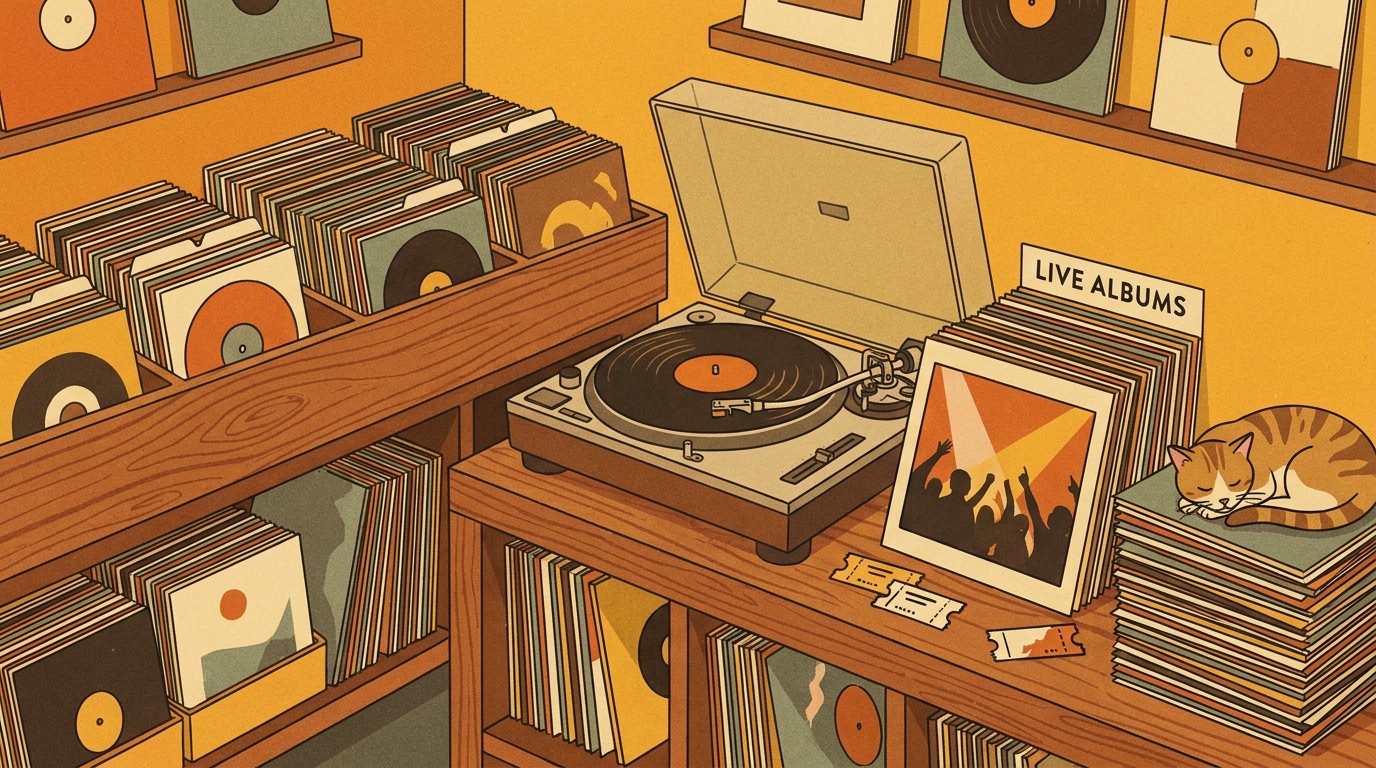
Live albums are where vinyl collecting gets gloriously specific. A studio record asks whether the songs and the production hold up. A live record adds other questions: does the room feel real, does the crowd become part of the music, does the pressing track the peaks without turning brittle, and does the package make the concert feel like an event? The best live albums on vinyl answer yes on all counts.
This list focuses on records that matter as records, not just as famous performances. Chart performance, certifications, original labels, cover art, and collector notes all count, because live albums are unusually physical objects. Gatefold sleeves, multi-LP sets, inserts, side-long jams, crowd noise, and stage photos are part of why people still hunt these down in record bins. Here are 15 essential live albums to know, buy, compare, and actually play.
-
1. At Fillmore East, The Allman Brothers Band (1971)
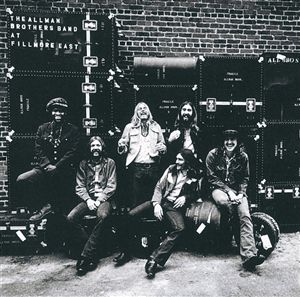
Recorded at Bill Graham's Fillmore East in New York in March 1971, produced by Tom Dowd, and first issued by Capricorn as a double LP, At Fillmore East became the template for Southern rock on a big stage. It reached the Top 20 on the Billboard LP chart and was later certified platinum in the United States. Original Capricorn copies, especially clean pink-label or early pressings, remain favorites because the long sides preserve the band's twin-guitar conversations, Berry Oakley's melodic bass, and Jai Johanny Johanson and Butch Trucks' rolling percussion without reducing the music to radio edits. The best live albums on vinyl tend to work because they are not merely souvenir recordings. They create a usable illusion: the listener drops the needle, the noise floor settles, the crowd opens up, and the band starts to occupy a real acoustic space. At Fillmore East does that with unusual authority, which is why it belongs in any serious conversation about the best live albums on vinyl.
For collectors, the details matter. Essential tracks include Statesboro Blues, In Memory of Elizabeth Reed, Whipping Post, but the album is more than a highlights reel. Side length, side order, the way applause is faded or preserved, and the physical condition of the jacket all shape the experience. Look for early Capricorn pressings with quiet vinyl, intact gatefold jackets, and matrices that avoid groove wear on the long improvisations. A live LP also asks more from a turntable setup than many studio records. If the cartridge mistracks near the inner groove, or if the record has groove wear from a heavy old changer, cymbals, crowd peaks, and vocal sibilance can become harsh fast.
Its genre importance comes from the way it defines a performance identity. Studio albums can make a band sound perfect; live albums reveal how musicians solve problems in public. On this record, tempo, crowd response, instrumental balance, and stage energy all become part of the composition. That is why collectors still talk about specific cuts, label variations, and reissue mastering choices rather than treating every copy as interchangeable. The album is not just historically important, it is an excellent test of whether your system can separate audience ambience from instruments without flattening the show.
If you are buying one copy, start with condition rather than rarity. A modest later pressing that plays quietly will usually beat a noisy first press, especially on live records where long fades, spoken introductions, and dynamic peaks expose damage. Still, a complete early package has real charm: original labels, period typography, inner sleeves, and gatefold photos connect the listener to the album as a cultural object. That mix of sound, story, and tactile collecting is exactly why At Fillmore East remains essential for vinyl listeners.
Sources and further reading: album background and release history. Cross-check chart and certification claims with Billboard archive references, RIAA or BPI databases, and original label discographies when evaluating a specific pressing.
-
2. Live at Leeds, The Who (1970)

The Who recorded Live at Leeds at the University of Leeds Refectory on February 14, 1970, with Kit Lambert credited as producer on the original release. The first Track Records and Decca LPs are famous for their plain brown sleeve, bootleg-style stamp, and inserts that turned the package into a miniature archive. The album reached the Top 5 in the United Kingdom and the Top 10 in the United States, and it helped make the idea of a deliberately raw live rock LP feel legitimate rather than compromised. The best live albums on vinyl tend to work because they are not merely souvenir recordings. They create a usable illusion: the listener drops the needle, the noise floor settles, the crowd opens up, and the band starts to occupy a real acoustic space. Live at Leeds does that with unusual authority, which is why it belongs in any serious conversation about the best live albums on vinyl.
For collectors, the details matter. Essential tracks include Young Man Blues, Substitute, My Generation, Magic Bus, but the album is more than a highlights reel. Side length, side order, the way applause is faded or preserved, and the physical condition of the jacket all shape the experience. Complete early copies with all inserts cost more, but even later pressings deliver the explosive room sound that makes this record a vinyl staple. A live LP also asks more from a turntable setup than many studio records. If the cartridge mistracks near the inner groove, or if the record has groove wear from a heavy old changer, cymbals, crowd peaks, and vocal sibilance can become harsh fast.
Its genre importance comes from the way it defines a performance identity. Studio albums can make a band sound perfect; live albums reveal how musicians solve problems in public. On this record, tempo, crowd response, instrumental balance, and stage energy all become part of the composition. That is why collectors still talk about specific cuts, label variations, and reissue mastering choices rather than treating every copy as interchangeable. The album is not just historically important, it is an excellent test of whether your system can separate audience ambience from instruments without flattening the show.
If you are buying one copy, start with condition rather than rarity. A modest later pressing that plays quietly will usually beat a noisy first press, especially on live records where long fades, spoken introductions, and dynamic peaks expose damage. Still, a complete early package has real charm: original labels, period typography, inner sleeves, and gatefold photos connect the listener to the album as a cultural object. That mix of sound, story, and tactile collecting is exactly why Live at Leeds remains essential for vinyl listeners.
Sources and further reading: album background and release history. Cross-check chart and certification claims with Billboard archive references, RIAA or BPI databases, and original label discographies when evaluating a specific pressing.
-
3. Frampton Comes Alive!, Peter Frampton (1976)
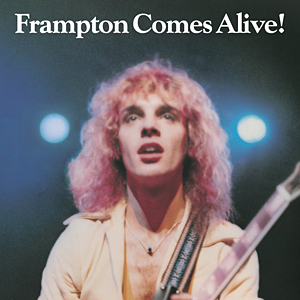
Frampton Comes Alive! was assembled from 1975 concerts and released by A&M as a double album in early 1976. It spent 10 weeks at number one on the Billboard 200 and became one of the best-selling live albums ever, with multi-platinum certification in the United States. Produced by Peter Frampton, the record turned extended versions of Show Me the Way, Baby, I Love Your Way, and Do You Feel Like We Do into FM radio fixtures, partly because the vinyl format gave the performances room to breathe. The best live albums on vinyl tend to work because they are not merely souvenir recordings. They create a usable illusion: the listener drops the needle, the noise floor settles, the crowd opens up, and the band starts to occupy a real acoustic space. Frampton Comes Alive! does that with unusual authority, which is why it belongs in any serious conversation about the best live albums on vinyl.
For collectors, the details matter. Essential tracks include Show Me the Way, Baby I Love Your Way, Do You Feel Like We Do, but the album is more than a highlights reel. Side length, side order, the way applause is faded or preserved, and the physical condition of the jacket all shape the experience. A clean A&M double LP is common enough to buy affordably, but quiet sides and a crisp gatefold still matter because crowd noise and talk box detail expose damage quickly. A live LP also asks more from a turntable setup than many studio records. If the cartridge mistracks near the inner groove, or if the record has groove wear from a heavy old changer, cymbals, crowd peaks, and vocal sibilance can become harsh fast.
Its genre importance comes from the way it defines a performance identity. Studio albums can make a band sound perfect; live albums reveal how musicians solve problems in public. On this record, tempo, crowd response, instrumental balance, and stage energy all become part of the composition. That is why collectors still talk about specific cuts, label variations, and reissue mastering choices rather than treating every copy as interchangeable. The album is not just historically important, it is an excellent test of whether your system can separate audience ambience from instruments without flattening the show.
If you are buying one copy, start with condition rather than rarity. A modest later pressing that plays quietly will usually beat a noisy first press, especially on live records where long fades, spoken introductions, and dynamic peaks expose damage. Still, a complete early package has real charm: original labels, period typography, inner sleeves, and gatefold photos connect the listener to the album as a cultural object. That mix of sound, story, and tactile collecting is exactly why Frampton Comes Alive! remains essential for vinyl listeners.
Sources and further reading: album background and release history. Cross-check chart and certification claims with Billboard archive references, RIAA or BPI databases, and original label discographies when evaluating a specific pressing.
-
4. At Folsom Prison, Johnny Cash (1968)
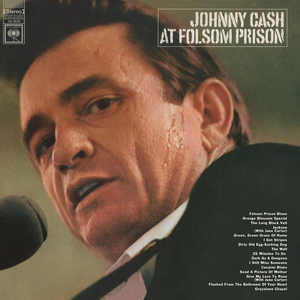
Johnny Cash recorded At Folsom Prison inside California's Folsom State Prison on January 13, 1968, with producer Bob Johnston for Columbia. The album reached number one on Billboard's country albums chart and crossed over to the pop market, later earning gold certification and becoming a cornerstone of Cash's late-1960s comeback. Its power is not just the set list, it is the sound of a performer reading the room, tightening his timing, and turning prison folklore into a human-scale concert document. The best live albums on vinyl tend to work because they are not merely souvenir recordings. They create a usable illusion: the listener drops the needle, the noise floor settles, the crowd opens up, and the band starts to occupy a real acoustic space. At Folsom Prison does that with unusual authority, which is why it belongs in any serious conversation about the best live albums on vinyl.
For collectors, the details matter. Essential tracks include Folsom Prison Blues, Cocaine Blues, Greystone Chapel, but the album is more than a highlights reel. Side length, side order, the way applause is faded or preserved, and the physical condition of the jacket all shape the experience. Early Columbia two-eye pressings and later well-mastered reissues both work, but collectors should prioritize vocal presence and low surface noise over hype stickers. A live LP also asks more from a turntable setup than many studio records. If the cartridge mistracks near the inner groove, or if the record has groove wear from a heavy old changer, cymbals, crowd peaks, and vocal sibilance can become harsh fast.
Its genre importance comes from the way it defines a performance identity. Studio albums can make a band sound perfect; live albums reveal how musicians solve problems in public. On this record, tempo, crowd response, instrumental balance, and stage energy all become part of the composition. That is why collectors still talk about specific cuts, label variations, and reissue mastering choices rather than treating every copy as interchangeable. The album is not just historically important, it is an excellent test of whether your system can separate audience ambience from instruments without flattening the show.
If you are buying one copy, start with condition rather than rarity. A modest later pressing that plays quietly will usually beat a noisy first press, especially on live records where long fades, spoken introductions, and dynamic peaks expose damage. Still, a complete early package has real charm: original labels, period typography, inner sleeves, and gatefold photos connect the listener to the album as a cultural object. That mix of sound, story, and tactile collecting is exactly why At Folsom Prison remains essential for vinyl listeners.
Sources and further reading: album background and release history. Cross-check chart and certification claims with Billboard archive references, RIAA or BPI databases, and original label discographies when evaluating a specific pressing.
-
5. Live at the Apollo, James Brown (1963)

James Brown financed the recording of Live at the Apollo after King Records reportedly doubted the commercial value of a live soul album. Recorded at Harlem's Apollo Theater in October 1962 and released in 1963, the LP became a major hit, reaching number two on the Billboard pop albums chart. The record is a lesson in stagecraft: tight band cues, audience call-and-response, medleys that move like theater, and microphone control that makes the room feel close enough to touch. The best live albums on vinyl tend to work because they are not merely souvenir recordings. They create a usable illusion: the listener drops the needle, the noise floor settles, the crowd opens up, and the band starts to occupy a real acoustic space. Live at the Apollo does that with unusual authority, which is why it belongs in any serious conversation about the best live albums on vinyl.
For collectors, the details matter. Essential tracks include I'll Go Crazy, Try Me, Lost Someone, Night Train, but the album is more than a highlights reel. Side length, side order, the way applause is faded or preserved, and the physical condition of the jacket all shape the experience. Original King mono copies are prized, but any pressing with strong midrange and minimal distortion reveals why this is one of the most important live records ever cut. A live LP also asks more from a turntable setup than many studio records. If the cartridge mistracks near the inner groove, or if the record has groove wear from a heavy old changer, cymbals, crowd peaks, and vocal sibilance can become harsh fast.
Its genre importance comes from the way it defines a performance identity. Studio albums can make a band sound perfect; live albums reveal how musicians solve problems in public. On this record, tempo, crowd response, instrumental balance, and stage energy all become part of the composition. That is why collectors still talk about specific cuts, label variations, and reissue mastering choices rather than treating every copy as interchangeable. The album is not just historically important, it is an excellent test of whether your system can separate audience ambience from instruments without flattening the show.
If you are buying one copy, start with condition rather than rarity. A modest later pressing that plays quietly will usually beat a noisy first press, especially on live records where long fades, spoken introductions, and dynamic peaks expose damage. Still, a complete early package has real charm: original labels, period typography, inner sleeves, and gatefold photos connect the listener to the album as a cultural object. That mix of sound, story, and tactile collecting is exactly why Live at the Apollo remains essential for vinyl listeners.
Sources and further reading: album background and release history. Cross-check chart and certification claims with Billboard archive references, RIAA or BPI databases, and original label discographies when evaluating a specific pressing.
-
6. Cheap Trick at Budokan, Cheap Trick (1978)

Cheap Trick at Budokan was recorded during the band's 1978 tour of Japan and first issued there before import demand pushed Epic to release it widely. It reached the Top 5 on the Billboard 200 and went multi-platinum, powered by the live version of I Want You to Want Me. The screaming crowd is part of the arrangement, not background noise, and the LP captures how power pop could become arena rock without losing hooks or wit. The best live albums on vinyl tend to work because they are not merely souvenir recordings. They create a usable illusion: the listener drops the needle, the noise floor settles, the crowd opens up, and the band starts to occupy a real acoustic space. Cheap Trick at Budokan does that with unusual authority, which is why it belongs in any serious conversation about the best live albums on vinyl.
For collectors, the details matter. Essential tracks include Hello There, Come On Come On, Surrender, I Want You to Want Me, but the album is more than a highlights reel. Side length, side order, the way applause is faded or preserved, and the physical condition of the jacket all shape the experience. Japanese originals, U.S. Epic copies, and expanded editions each have appeal, but the classic single-LP sequence remains the punchiest way to hear the concert myth. A live LP also asks more from a turntable setup than many studio records. If the cartridge mistracks near the inner groove, or if the record has groove wear from a heavy old changer, cymbals, crowd peaks, and vocal sibilance can become harsh fast.
Its genre importance comes from the way it defines a performance identity. Studio albums can make a band sound perfect; live albums reveal how musicians solve problems in public. On this record, tempo, crowd response, instrumental balance, and stage energy all become part of the composition. That is why collectors still talk about specific cuts, label variations, and reissue mastering choices rather than treating every copy as interchangeable. The album is not just historically important, it is an excellent test of whether your system can separate audience ambience from instruments without flattening the show.
If you are buying one copy, start with condition rather than rarity. A modest later pressing that plays quietly will usually beat a noisy first press, especially on live records where long fades, spoken introductions, and dynamic peaks expose damage. Still, a complete early package has real charm: original labels, period typography, inner sleeves, and gatefold photos connect the listener to the album as a cultural object. That mix of sound, story, and tactile collecting is exactly why Cheap Trick at Budokan remains essential for vinyl listeners.
Sources and further reading: album background and release history. Cross-check chart and certification claims with Billboard archive references, RIAA or BPI databases, and original label discographies when evaluating a specific pressing.
-
7. Get Yer Ya-Ya's Out!, The Rolling Stones (1970)
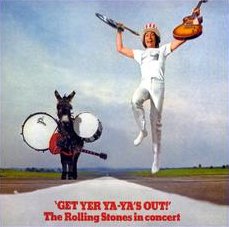
Recorded mostly at Madison Square Garden in November 1969 and produced by Jimmy Miller, Get Yer Ya-Ya's Out! captured The Rolling Stones at the start of the Mick Taylor era. The album reached number one in the United Kingdom and the Top 10 in the United States, and it is often cited as one of the definitive live rock documents. On vinyl, the appeal is the guitars: Keith Richards and Taylor occupy different textures, with Charlie Watts keeping the whole thing dry, centered, and dangerous. The best live albums on vinyl tend to work because they are not merely souvenir recordings. They create a usable illusion: the listener drops the needle, the noise floor settles, the crowd opens up, and the band starts to occupy a real acoustic space. Get Yer Ya-Ya's Out! does that with unusual authority, which is why it belongs in any serious conversation about the best live albums on vinyl.
For collectors, the details matter. Essential tracks include Jumpin' Jack Flash, Midnight Rambler, Sympathy for the Devil, Street Fighting Man, but the album is more than a highlights reel. Side length, side order, the way applause is faded or preserved, and the physical condition of the jacket all shape the experience. Early Decca and London copies are collectible, and later reissues can sound excellent if they keep the guitars forward without over-brightening the cymbals. A live LP also asks more from a turntable setup than many studio records. If the cartridge mistracks near the inner groove, or if the record has groove wear from a heavy old changer, cymbals, crowd peaks, and vocal sibilance can become harsh fast.
Its genre importance comes from the way it defines a performance identity. Studio albums can make a band sound perfect; live albums reveal how musicians solve problems in public. On this record, tempo, crowd response, instrumental balance, and stage energy all become part of the composition. That is why collectors still talk about specific cuts, label variations, and reissue mastering choices rather than treating every copy as interchangeable. The album is not just historically important, it is an excellent test of whether your system can separate audience ambience from instruments without flattening the show.
If you are buying one copy, start with condition rather than rarity. A modest later pressing that plays quietly will usually beat a noisy first press, especially on live records where long fades, spoken introductions, and dynamic peaks expose damage. Still, a complete early package has real charm: original labels, period typography, inner sleeves, and gatefold photos connect the listener to the album as a cultural object. That mix of sound, story, and tactile collecting is exactly why Get Yer Ya-Ya's Out! remains essential for vinyl listeners.
Sources and further reading: album background and release history. Cross-check chart and certification claims with Billboard archive references, RIAA or BPI databases, and original label discographies when evaluating a specific pressing.
-
8. Stop Making Sense, Talking Heads (1984)

Stop Making Sense documents Talking Heads during the tour filmed by Jonathan Demme, with performances recorded in Los Angeles in December 1983. Produced by the band, the original Sire LP presents a concise version of the show, while later editions expand the set. The album charted in the United States and United Kingdom and eventually became inseparable from the film's reputation, but vinyl collectors value it for a different reason: the arrangements build in layers, so the format rewards attentive side-by-side listening. The best live albums on vinyl tend to work because they are not merely souvenir recordings. They create a usable illusion: the listener drops the needle, the noise floor settles, the crowd opens up, and the band starts to occupy a real acoustic space. Stop Making Sense does that with unusual authority, which is why it belongs in any serious conversation about the best live albums on vinyl.
For collectors, the details matter. Essential tracks include Psycho Killer, Slippery People, Burning Down the House, This Must Be the Place, but the album is more than a highlights reel. Side length, side order, the way applause is faded or preserved, and the physical condition of the jacket all shape the experience. The original LP is punchy and short, while complete soundtrack reissues suit collectors who want the full arc of the stage production. A live LP also asks more from a turntable setup than many studio records. If the cartridge mistracks near the inner groove, or if the record has groove wear from a heavy old changer, cymbals, crowd peaks, and vocal sibilance can become harsh fast.
Its genre importance comes from the way it defines a performance identity. Studio albums can make a band sound perfect; live albums reveal how musicians solve problems in public. On this record, tempo, crowd response, instrumental balance, and stage energy all become part of the composition. That is why collectors still talk about specific cuts, label variations, and reissue mastering choices rather than treating every copy as interchangeable. The album is not just historically important, it is an excellent test of whether your system can separate audience ambience from instruments without flattening the show.
If you are buying one copy, start with condition rather than rarity. A modest later pressing that plays quietly will usually beat a noisy first press, especially on live records where long fades, spoken introductions, and dynamic peaks expose damage. Still, a complete early package has real charm: original labels, period typography, inner sleeves, and gatefold photos connect the listener to the album as a cultural object. That mix of sound, story, and tactile collecting is exactly why Stop Making Sense remains essential for vinyl listeners.
Sources and further reading: album background and release history. Cross-check chart and certification claims with Billboard archive references, RIAA or BPI databases, and original label discographies when evaluating a specific pressing.
-
9. Europe '72, Grateful Dead (1972)

Europe '72 collected performances from the Grateful Dead's spring 1972 European tour and appeared as a triple LP on Warner Bros. It reached the Billboard album chart and was later certified multi-platinum, introducing many listeners to the Dead's early-1970s blend of country-rock songwriting and open-ended improvisation. The record also includes overdubs, which makes it a fascinating hybrid: a live album with the polish of a studio document, yet still rooted in real tour performances. The best live albums on vinyl tend to work because they are not merely souvenir recordings. They create a usable illusion: the listener drops the needle, the noise floor settles, the crowd opens up, and the band starts to occupy a real acoustic space. Europe '72 does that with unusual authority, which is why it belongs in any serious conversation about the best live albums on vinyl.
For collectors, the details matter. Essential tracks include Cumberland Blues, China Cat Sunflower, Jack Straw, Morning Dew, but the album is more than a highlights reel. Side length, side order, the way applause is faded or preserved, and the physical condition of the jacket all shape the experience. Original green-label Warner copies and later Rhino pressings both have fans, but clean vinyl is important because the quieter passages make groove wear obvious. A live LP also asks more from a turntable setup than many studio records. If the cartridge mistracks near the inner groove, or if the record has groove wear from a heavy old changer, cymbals, crowd peaks, and vocal sibilance can become harsh fast.
Its genre importance comes from the way it defines a performance identity. Studio albums can make a band sound perfect; live albums reveal how musicians solve problems in public. On this record, tempo, crowd response, instrumental balance, and stage energy all become part of the composition. That is why collectors still talk about specific cuts, label variations, and reissue mastering choices rather than treating every copy as interchangeable. The album is not just historically important, it is an excellent test of whether your system can separate audience ambience from instruments without flattening the show.
If you are buying one copy, start with condition rather than rarity. A modest later pressing that plays quietly will usually beat a noisy first press, especially on live records where long fades, spoken introductions, and dynamic peaks expose damage. Still, a complete early package has real charm: original labels, period typography, inner sleeves, and gatefold photos connect the listener to the album as a cultural object. That mix of sound, story, and tactile collecting is exactly why Europe '72 remains essential for vinyl listeners.
Sources and further reading: album background and release history. Cross-check chart and certification claims with Billboard archive references, RIAA or BPI databases, and original label discographies when evaluating a specific pressing.
-
10. Live/Dead, Grateful Dead (1969)
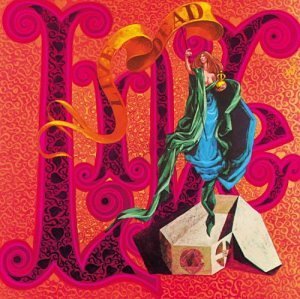
Live/Dead was recorded in early 1969 and released by Warner Bros. as a double LP, produced by the Grateful Dead with Bob Matthews and Betty Cantor. It is the record that put the band's psychedelic improvisation on vinyl at album length, with Dark Star occupying an entire side and flowing into St. Stephen and The Eleven. The album charted modestly at first, but its long-term influence is enormous because it showed that a rock LP could document process, risk, and collective listening. The best live albums on vinyl tend to work because they are not merely souvenir recordings. They create a usable illusion: the listener drops the needle, the noise floor settles, the crowd opens up, and the band starts to occupy a real acoustic space. Live/Dead does that with unusual authority, which is why it belongs in any serious conversation about the best live albums on vinyl.
For collectors, the details matter. Essential tracks include Dark Star, St. Stephen, The Eleven, Turn On Your Love Light, but the album is more than a highlights reel. Side length, side order, the way applause is faded or preserved, and the physical condition of the jacket all shape the experience. Warner originals are desirable, but mastering matters more than scarcity because the side-long transitions need low noise and stable inner-groove tracking. A live LP also asks more from a turntable setup than many studio records. If the cartridge mistracks near the inner groove, or if the record has groove wear from a heavy old changer, cymbals, crowd peaks, and vocal sibilance can become harsh fast.
Its genre importance comes from the way it defines a performance identity. Studio albums can make a band sound perfect; live albums reveal how musicians solve problems in public. On this record, tempo, crowd response, instrumental balance, and stage energy all become part of the composition. That is why collectors still talk about specific cuts, label variations, and reissue mastering choices rather than treating every copy as interchangeable. The album is not just historically important, it is an excellent test of whether your system can separate audience ambience from instruments without flattening the show.
If you are buying one copy, start with condition rather than rarity. A modest later pressing that plays quietly will usually beat a noisy first press, especially on live records where long fades, spoken introductions, and dynamic peaks expose damage. Still, a complete early package has real charm: original labels, period typography, inner sleeves, and gatefold photos connect the listener to the album as a cultural object. That mix of sound, story, and tactile collecting is exactly why Live/Dead remains essential for vinyl listeners.
Sources and further reading: album background and release history. Cross-check chart and certification claims with Billboard archive references, RIAA or BPI databases, and original label discographies when evaluating a specific pressing.
-
11. The Last Waltz, The Band (1978)

The Last Waltz was recorded around The Band's farewell concert at Winterland Ballroom on Thanksgiving Day 1976 and released as a three-LP Warner Bros. set in 1978 alongside Martin Scorsese's film. Produced by Robbie Robertson, it mixes concert performances, guest turns, and studio-linked material into a grand closing statement. It charted in the United States and United Kingdom, but its real value for vinyl collectors is ceremonial: multiple LPs, a big jacket, famous guests, and a side-changing rhythm that feels like an evening rather than a playlist. The best live albums on vinyl tend to work because they are not merely souvenir recordings. They create a usable illusion: the listener drops the needle, the noise floor settles, the crowd opens up, and the band starts to occupy a real acoustic space. The Last Waltz does that with unusual authority, which is why it belongs in any serious conversation about the best live albums on vinyl.
For collectors, the details matter. Essential tracks include The Night They Drove Old Dixie Down, Ophelia, Further On Up the Road, I Shall Be Released, but the album is more than a highlights reel. Side length, side order, the way applause is faded or preserved, and the physical condition of the jacket all shape the experience. Complete three-LP sets with clean booklets and untrashed jackets are the buy, since the package is central to the album's appeal. A live LP also asks more from a turntable setup than many studio records. If the cartridge mistracks near the inner groove, or if the record has groove wear from a heavy old changer, cymbals, crowd peaks, and vocal sibilance can become harsh fast.
Its genre importance comes from the way it defines a performance identity. Studio albums can make a band sound perfect; live albums reveal how musicians solve problems in public. On this record, tempo, crowd response, instrumental balance, and stage energy all become part of the composition. That is why collectors still talk about specific cuts, label variations, and reissue mastering choices rather than treating every copy as interchangeable. The album is not just historically important, it is an excellent test of whether your system can separate audience ambience from instruments without flattening the show.
If you are buying one copy, start with condition rather than rarity. A modest later pressing that plays quietly will usually beat a noisy first press, especially on live records where long fades, spoken introductions, and dynamic peaks expose damage. Still, a complete early package has real charm: original labels, period typography, inner sleeves, and gatefold photos connect the listener to the album as a cultural object. That mix of sound, story, and tactile collecting is exactly why The Last Waltz remains essential for vinyl listeners.
Sources and further reading: album background and release history. Cross-check chart and certification claims with Billboard archive references, RIAA or BPI databases, and original label discographies when evaluating a specific pressing.
-
12. Waiting for Columbus, Little Feat (1978)
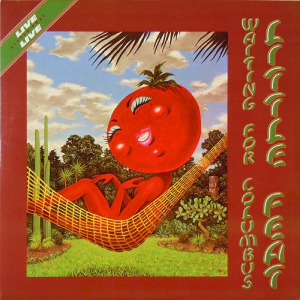
Waiting for Columbus was recorded during 1977 shows in London and Washington, D.C., then released by Warner Bros. in 1978 as a double LP. Produced by Lowell George, the album reached the Top 20 on the Billboard 200 and was later certified platinum, becoming Little Feat's best-known record. Its vinyl strength is groove: funk, New Orleans rhythm, rock guitar, and horn charts fit together with enough air that a good pressing sounds both relaxed and technically sharp. The best live albums on vinyl tend to work because they are not merely souvenir recordings. They create a usable illusion: the listener drops the needle, the noise floor settles, the crowd opens up, and the band starts to occupy a real acoustic space. Waiting for Columbus does that with unusual authority, which is why it belongs in any serious conversation about the best live albums on vinyl.
For collectors, the details matter. Essential tracks include Fat Man in the Bathtub, Dixie Chicken, Willin', Spanish Moon, but the album is more than a highlights reel. Side length, side order, the way applause is faded or preserved, and the physical condition of the jacket all shape the experience. Original palm-tree Warner pressings are common enough to hunt in nice shape, and the best copies keep Richie Hayward's drums crisp without thinning Lowell George's slide guitar. A live LP also asks more from a turntable setup than many studio records. If the cartridge mistracks near the inner groove, or if the record has groove wear from a heavy old changer, cymbals, crowd peaks, and vocal sibilance can become harsh fast.
Its genre importance comes from the way it defines a performance identity. Studio albums can make a band sound perfect; live albums reveal how musicians solve problems in public. On this record, tempo, crowd response, instrumental balance, and stage energy all become part of the composition. That is why collectors still talk about specific cuts, label variations, and reissue mastering choices rather than treating every copy as interchangeable. The album is not just historically important, it is an excellent test of whether your system can separate audience ambience from instruments without flattening the show.
If you are buying one copy, start with condition rather than rarity. A modest later pressing that plays quietly will usually beat a noisy first press, especially on live records where long fades, spoken introductions, and dynamic peaks expose damage. Still, a complete early package has real charm: original labels, period typography, inner sleeves, and gatefold photos connect the listener to the album as a cultural object. That mix of sound, story, and tactile collecting is exactly why Waiting for Columbus remains essential for vinyl listeners.
Sources and further reading: album background and release history. Cross-check chart and certification claims with Billboard archive references, RIAA or BPI databases, and original label discographies when evaluating a specific pressing.
-
13. Alive!, KISS (1975)
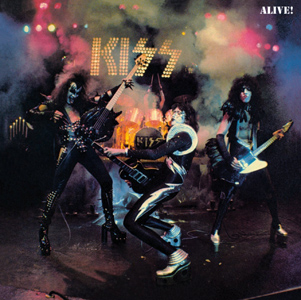
Alive! gathered performances from KISS concerts in 1975 and was released by Casablanca as a double LP at the moment the band needed a breakthrough. It reached the Top 10 on the Billboard 200 and was certified multi-platinum, giving the group its first major commercial explosion. The record has long been debated for studio sweetening, but that debate almost misses the point: Alive! sells the spectacle, the crowd, the riffs, and the mythology with the confidence of a comic book printed at concert volume. The best live albums on vinyl tend to work because they are not merely souvenir recordings. They create a usable illusion: the listener drops the needle, the noise floor settles, the crowd opens up, and the band starts to occupy a real acoustic space. Alive! does that with unusual authority, which is why it belongs in any serious conversation about the best live albums on vinyl.
For collectors, the details matter. Essential tracks include Deuce, Strutter, Black Diamond, Rock and Roll All Nite, but the album is more than a highlights reel. Side length, side order, the way applause is faded or preserved, and the physical condition of the jacket all shape the experience. Collectors care about early Casablanca copies, booklet condition, and jacket wear, since the package is part of the KISS experience as much as the mastering. A live LP also asks more from a turntable setup than many studio records. If the cartridge mistracks near the inner groove, or if the record has groove wear from a heavy old changer, cymbals, crowd peaks, and vocal sibilance can become harsh fast.
Its genre importance comes from the way it defines a performance identity. Studio albums can make a band sound perfect; live albums reveal how musicians solve problems in public. On this record, tempo, crowd response, instrumental balance, and stage energy all become part of the composition. That is why collectors still talk about specific cuts, label variations, and reissue mastering choices rather than treating every copy as interchangeable. The album is not just historically important, it is an excellent test of whether your system can separate audience ambience from instruments without flattening the show.
If you are buying one copy, start with condition rather than rarity. A modest later pressing that plays quietly will usually beat a noisy first press, especially on live records where long fades, spoken introductions, and dynamic peaks expose damage. Still, a complete early package has real charm: original labels, period typography, inner sleeves, and gatefold photos connect the listener to the album as a cultural object. That mix of sound, story, and tactile collecting is exactly why Alive! remains essential for vinyl listeners.
Sources and further reading: album background and release history. Cross-check chart and certification claims with Billboard archive references, RIAA or BPI databases, and original label discographies when evaluating a specific pressing.
-
14. MTV Unplugged in New York, Nirvana (1994)
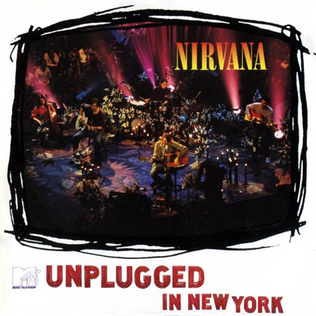
MTV Unplugged in New York was recorded in November 1993 and released in 1994 by DGC after Kurt Cobain's death. Produced by Scott Litt and Nirvana, the album debuted at number one on the Billboard 200 and won the Grammy Award for Best Alternative Music Album. On vinyl, it stands apart from louder grunge-era records because it emphasizes room tone, restraint, and sequencing, with covers and deep cuts arranged like a wake rather than a victory lap. The best live albums on vinyl tend to work because they are not merely souvenir recordings. They create a usable illusion: the listener drops the needle, the noise floor settles, the crowd opens up, and the band starts to occupy a real acoustic space. MTV Unplugged in New York does that with unusual authority, which is why it belongs in any serious conversation about the best live albums on vinyl.
For collectors, the details matter. Essential tracks include About a Girl, The Man Who Sold the World, Lake of Fire, Where Did You Sleep Last Night, but the album is more than a highlights reel. Side length, side order, the way applause is faded or preserved, and the physical condition of the jacket all shape the experience. Original 1990s vinyl is expensive, so many buyers choose later official reissues and focus on clean, centered pressings with natural acoustic texture. A live LP also asks more from a turntable setup than many studio records. If the cartridge mistracks near the inner groove, or if the record has groove wear from a heavy old changer, cymbals, crowd peaks, and vocal sibilance can become harsh fast.
Its genre importance comes from the way it defines a performance identity. Studio albums can make a band sound perfect; live albums reveal how musicians solve problems in public. On this record, tempo, crowd response, instrumental balance, and stage energy all become part of the composition. That is why collectors still talk about specific cuts, label variations, and reissue mastering choices rather than treating every copy as interchangeable. The album is not just historically important, it is an excellent test of whether your system can separate audience ambience from instruments without flattening the show.
If you are buying one copy, start with condition rather than rarity. A modest later pressing that plays quietly will usually beat a noisy first press, especially on live records where long fades, spoken introductions, and dynamic peaks expose damage. Still, a complete early package has real charm: original labels, period typography, inner sleeves, and gatefold photos connect the listener to the album as a cultural object. That mix of sound, story, and tactile collecting is exactly why MTV Unplugged in New York remains essential for vinyl listeners.
Sources and further reading: album background and release history. Cross-check chart and certification claims with Billboard archive references, RIAA or BPI databases, and original label discographies when evaluating a specific pressing.
-
15. One More from the Road, Lynyrd Skynyrd (1976)

One More from the Road was recorded at the Fox Theatre in Atlanta in July 1976 and released by MCA as a double LP. Produced by Tom Dowd, it reached the Top 10 on the Billboard 200 and went multi-platinum, cementing Lynyrd Skynyrd's reputation as a road-tested band rather than just a studio singles act. The triple-guitar attack is the obvious draw, but the vinyl experience also highlights the pacing, from boogie workouts to the long communal release of Free Bird. The best live albums on vinyl tend to work because they are not merely souvenir recordings. They create a usable illusion: the listener drops the needle, the noise floor settles, the crowd opens up, and the band starts to occupy a real acoustic space. One More from the Road does that with unusual authority, which is why it belongs in any serious conversation about the best live albums on vinyl.
For collectors, the details matter. Essential tracks include Workin' for MCA, Sweet Home Alabama, Tuesday's Gone, Free Bird, but the album is more than a highlights reel. Side length, side order, the way applause is faded or preserved, and the physical condition of the jacket all shape the experience. Original MCA rainbow-label copies are plentiful, but the best buys are clean double LPs with strong bass, intact gatefolds, and no inner-groove crunch on Free Bird. A live LP also asks more from a turntable setup than many studio records. If the cartridge mistracks near the inner groove, or if the record has groove wear from a heavy old changer, cymbals, crowd peaks, and vocal sibilance can become harsh fast.
Its genre importance comes from the way it defines a performance identity. Studio albums can make a band sound perfect; live albums reveal how musicians solve problems in public. On this record, tempo, crowd response, instrumental balance, and stage energy all become part of the composition. That is why collectors still talk about specific cuts, label variations, and reissue mastering choices rather than treating every copy as interchangeable. The album is not just historically important, it is an excellent test of whether your system can separate audience ambience from instruments without flattening the show.
If you are buying one copy, start with condition rather than rarity. A modest later pressing that plays quietly will usually beat a noisy first press, especially on live records where long fades, spoken introductions, and dynamic peaks expose damage. Still, a complete early package has real charm: original labels, period typography, inner sleeves, and gatefold photos connect the listener to the album as a cultural object. That mix of sound, story, and tactile collecting is exactly why One More from the Road remains essential for vinyl listeners.
Sources and further reading: album background and release history. Cross-check chart and certification claims with Billboard archive references, RIAA or BPI databases, and original label discographies when evaluating a specific pressing.
What to buy first
If you want the most universally useful starter copy, buy At Fillmore East first. It has the music, the sound, the reputation, and the collector depth to reward repeat listening. If you want a cheaper crowd-pleaser, Frampton Comes Alive! or Cheap Trick at Budokan are often easier to find in clean condition. If you want a system test, choose Live at Leeds, Live/Dead, or MTV Unplugged in New York, because each exposes a different weakness in tracking, noise floor, and tonal balance.
FAQ
What makes a live album especially good on vinyl?
A great live album benefits from side breaks, dynamics, crowd ambience, and a sequence that feels like a concert rather than a playlist. Vinyl also makes packaging matter: gatefold photos, liner notes, booklets, and original labels turn the record into a physical document of a show.
Should collectors buy original pressings or modern reissues?
Original pressings are wonderful when they are clean and complete, but live albums are often played hard. A quiet modern reissue can be the better listening copy, especially for albums with long quiet passages, acoustic sets, or side-long jams.
Are live albums with overdubs still worth collecting?
Yes, as long as you know what you are buying. Many classic live albums include edits or studio repairs, but the best ones still preserve a real performance identity. For collectors, the question is less purity and more whether the record captures a convincing concert experience.
How should I grade used live albums before buying?
Inspect all discs under strong light, check the jacket and inserts, and ask to play-test the quietest passages if possible. Crowd noise can hide some marks, but acoustic songs, introductions, and fade-outs reveal surface noise quickly.
A spreadsheet tracks what you own. What's Spinning identifies what's playing.
On-device vinyl ID logs your listening history automatically. 7-day free trial.
Looking for Shazam for vinyl?
What's Spinning identifies what's playing on your turntable on-device, logs history, and AirPlays now-playing to your TV.
Comparing vinyl ID apps?
Analog requires Discogs and is iPhone-first (iPad coming). What's Spinning works without Discogs on iPhone and iPad with AirPlay.
Try What's Spinning Free
Turn your iPad into a live now-playing display. Track every record you spin.
START FREE TRIALThen $4.99/mo or $39.99/yr · Cancel anytime